
BUITENZORG
RETREAT, ORDER, & COLONIAL AUTHORITY: DESIGNING FOR EUROPEAN POWER IN JAVA
Feature photo from here
Originally submitted as part of the curriculum at Thomas Jefferson University | February 28, 2026

Introduction
Deep inland Java, lifted roughly three hundred meters above the coastal heat, wrapped in volcanic mountains and drenched often enough to earn the nickname kota hujan, sits Bogor, the City of Rain (Kementerian Sekretariat Negara Republik Indonesia, n.d.; Atlas of Mutual Heritage, n.d.). The air runs cooler here and the ground opens wide, flat, and fertile. The horizon carries the kind of depth that makes a person breathe differently. Bogor offers relief first as weather, then as mood, then as complete reprieve.
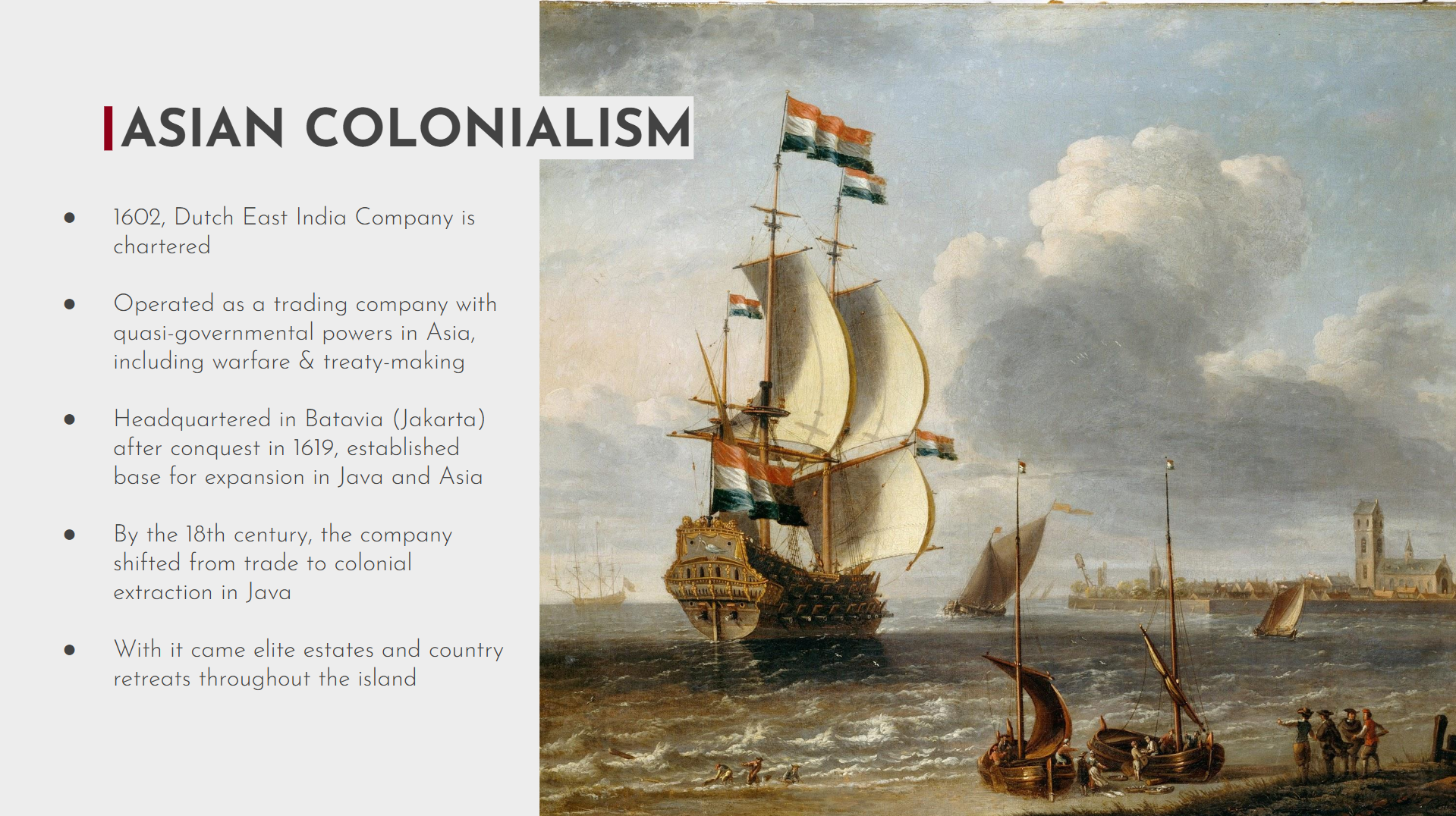
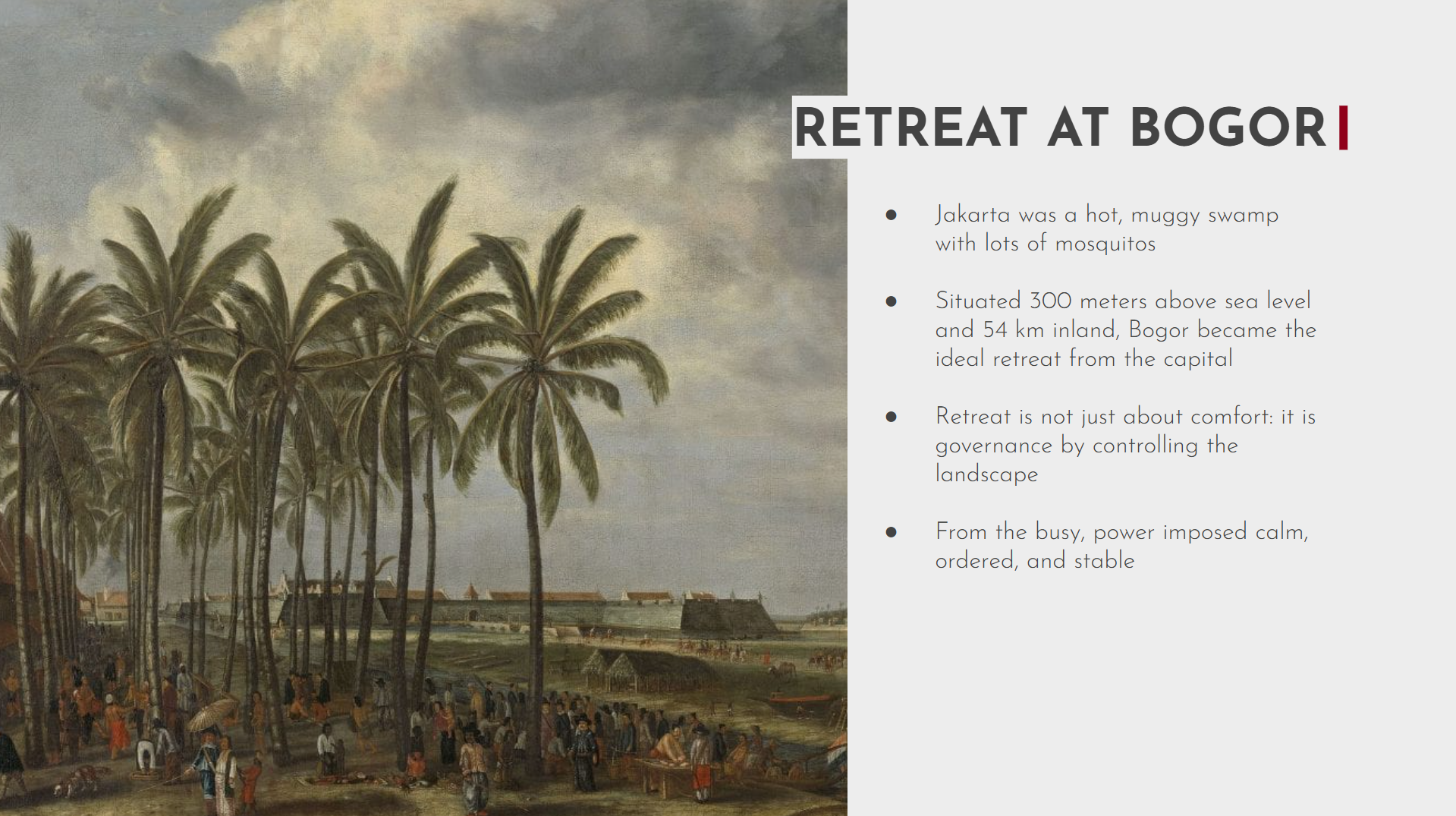
That relief mattered to the commanders of the Dutch East India Company, who secured Batavia (now Jakarta) on the coast in 1619. There, they built a headquarters to operate as an administrative center for Dutch rule in Southeast Asia (Kehoe, 2015; Encyclopaedia Britannica, n.d.). Batavia offered expansive opportunity, but with it heat, disease, and mosquitos. This was a capital that forced its administrators to live inside the physical consequences of their own colonial geometry. Bogor was the inland answer. Retreat became a privilege, then a policy, then a spatial strategy.
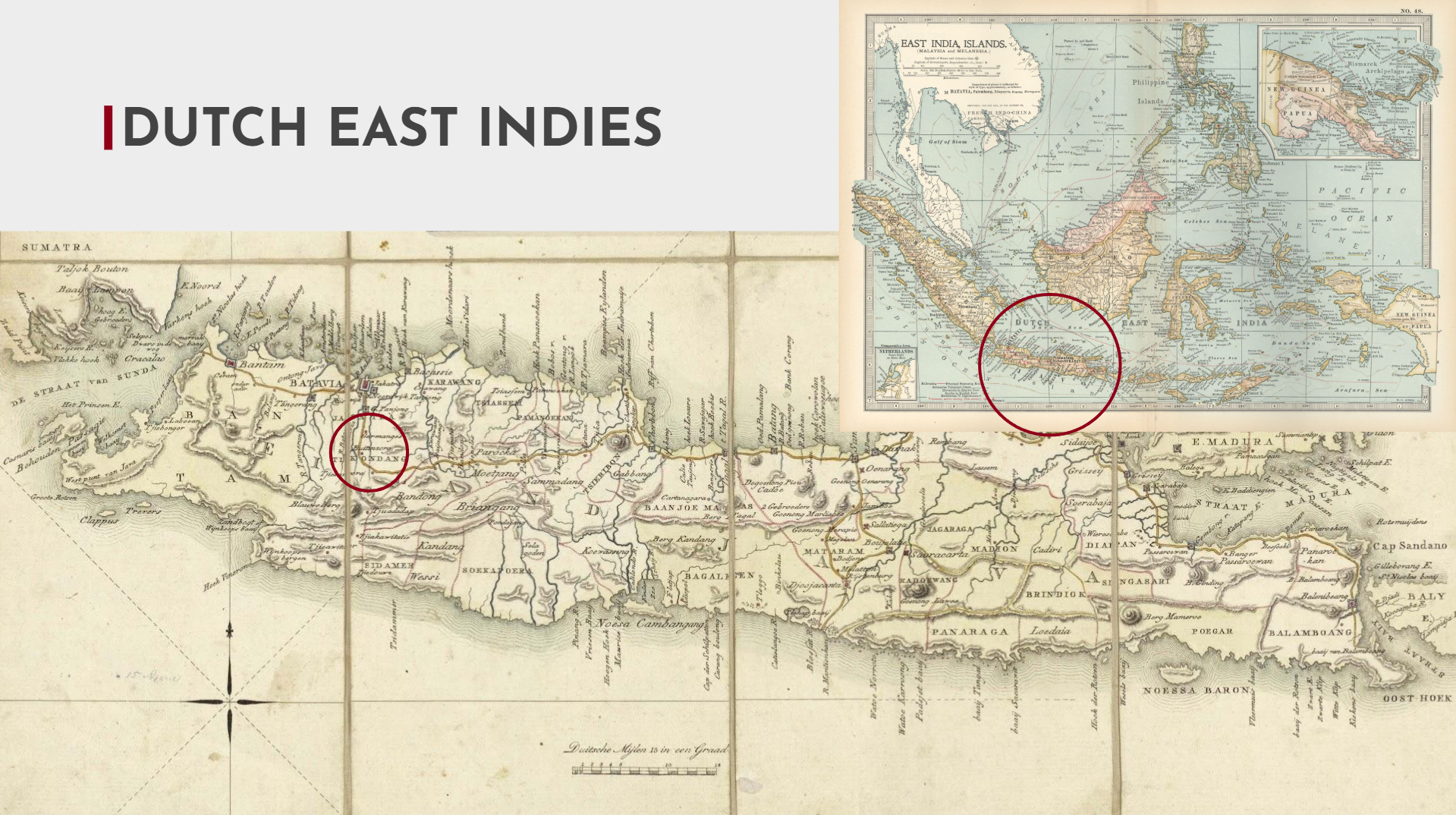
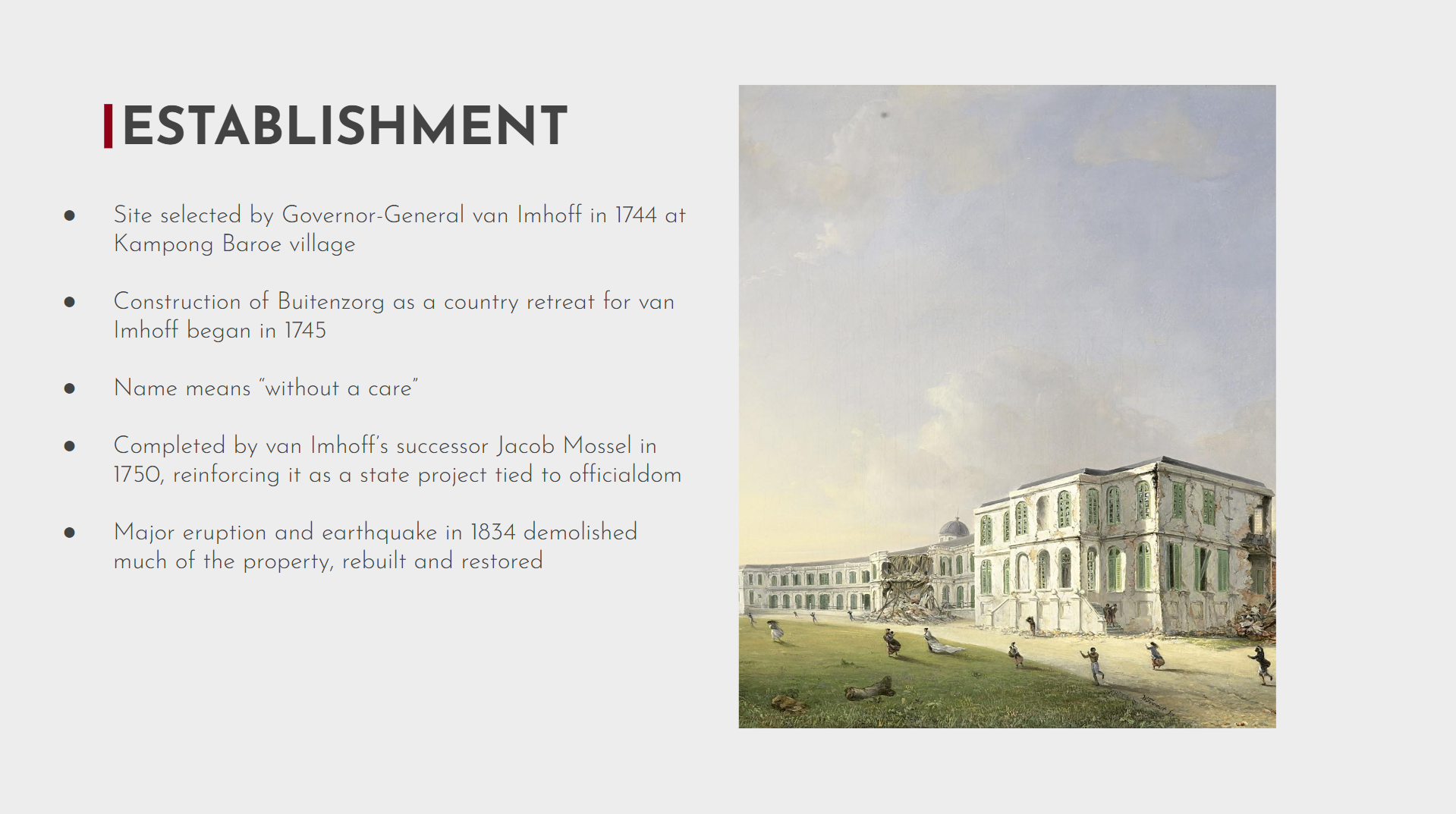
In 1745, Governor-General Gustaaf Willem van Imhoff chose Kampong Baru, about 54 kilometers from Batavia and about 300 meters above sea level, for a country house outside the “busy and unhealthy” capital (Atlas of Mutual Heritage, n.d.). The name was blunt in its ambition. Buitenzorg translates as “away from sorrow or care,” a promise carved into place as if worry could be designed out of existence (de Wit, 1896). The estate was conceived as respite, a landscape for recovery and distance, an island palace where the ruling class could step out of the humidity and into a calmer tempo. Retreat does not sit outside power: retreat is power at ease.
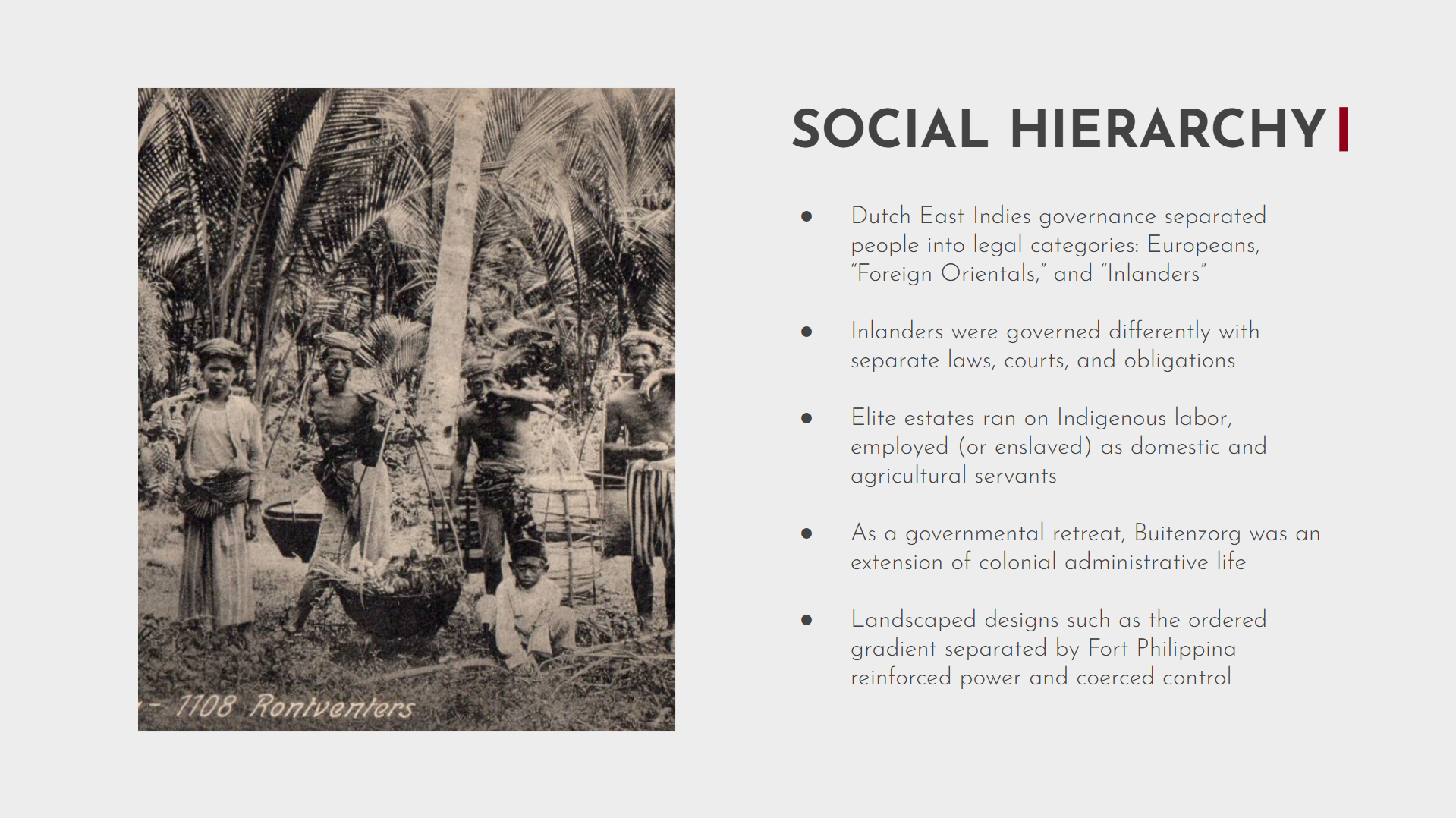
The Dutch East Indies were controlled through steep class differences, with Europeans occupying dominant positions and indigenous “inlanders” governed as a subordinated category (Verzetsmuseum Amsterdam, n.d.). Hierarchy was not a social affliction, it was administration. It was categories, mobility, access, and a daily system of sorting. Under those conditions, landscapes carry political weight because landscapes can enforce hierarchy without compromising its covert application as enforcement. The ground can decide who belongs, the path can decide who approaches, the view can decide what authority looks like.
Colonial extraction sharpened the need for legitimacy. The Company imposed compulsory cultivation or labor obligations, formalizing economic coercion through policy and tying land and bodies to export value (Encyclopaedia Britannica, 2026). Coercion produces instability, and instability demands stability that looks inevitable. Colonial authority could rely on capacity and force, but force alone does not make a regime feel permanent. Permanence is a performance. Landscapes turn politics into environment, becoming the indellible stage of power performance.
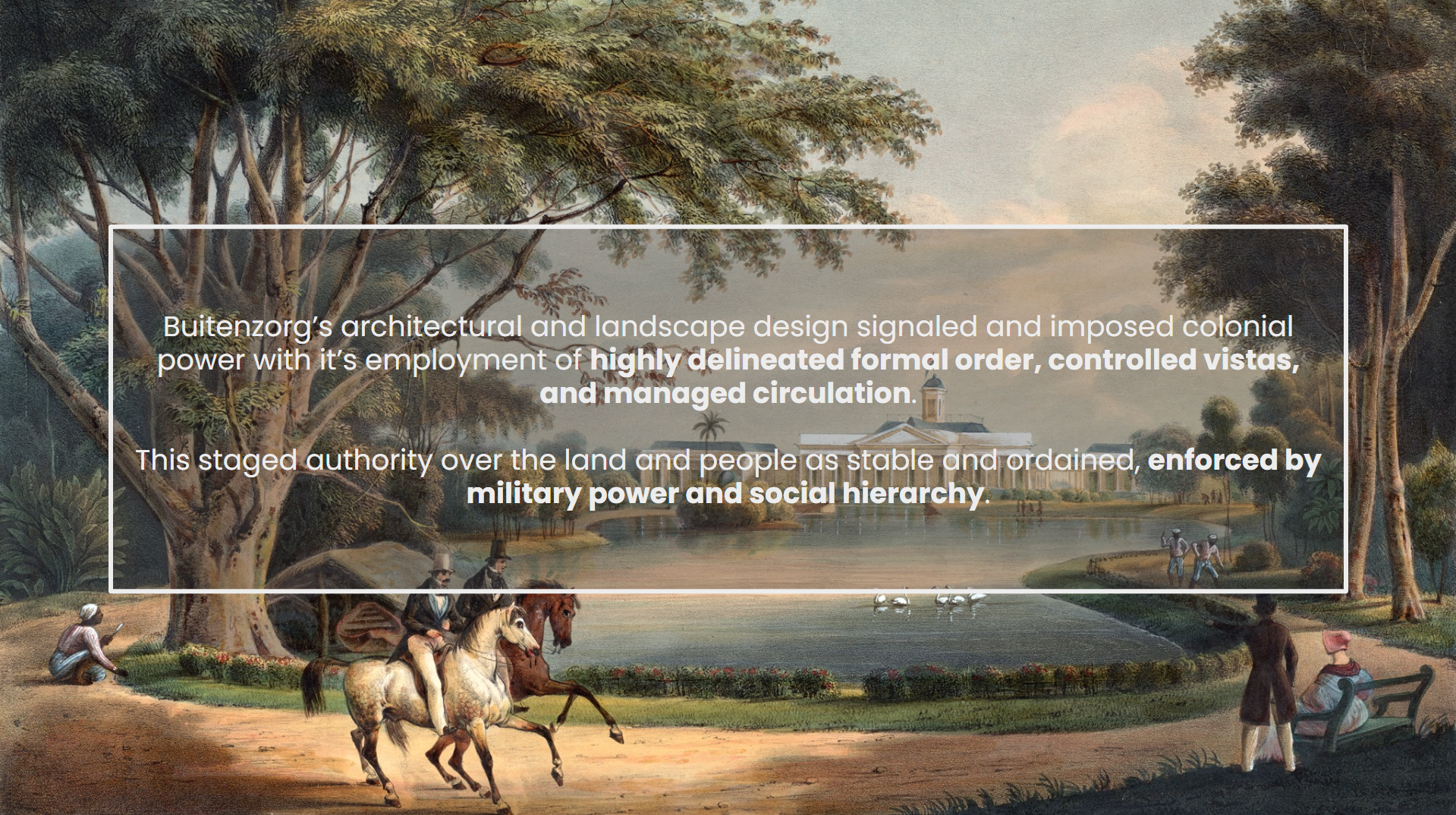
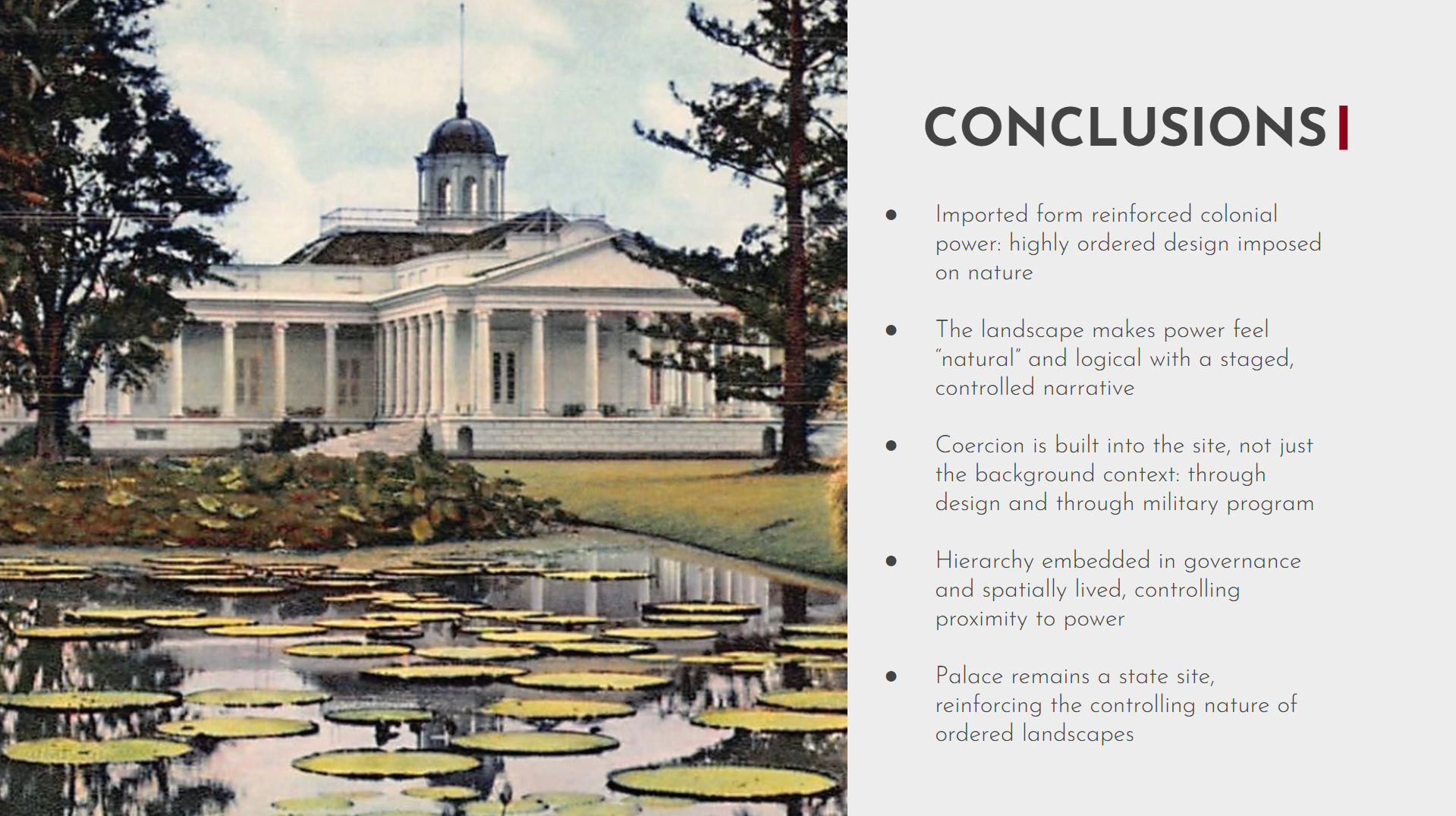
Buitenzorg’s landscape design, despite its function as a retreat from Batavia, signaled and imposed colonial power in Java through formalized plan order, managed circulation, and controlled vistas, staging authority over Indonesian land and people as stable and ordained, defended and enforced by military power and social hierarchy, then extended through managed ecologies that converted tropical abundance into inventory and administration (Oldenburger-Ebbers, 1999; The Metropolitan Museum of Art, 2003; Atlas of Mutual Heritage, n.d.; Verzetsmuseum Amsterdam, n.d.; UNESCO World Heritage Centre, n.d.; Wereldmuseum, n.d.).
-
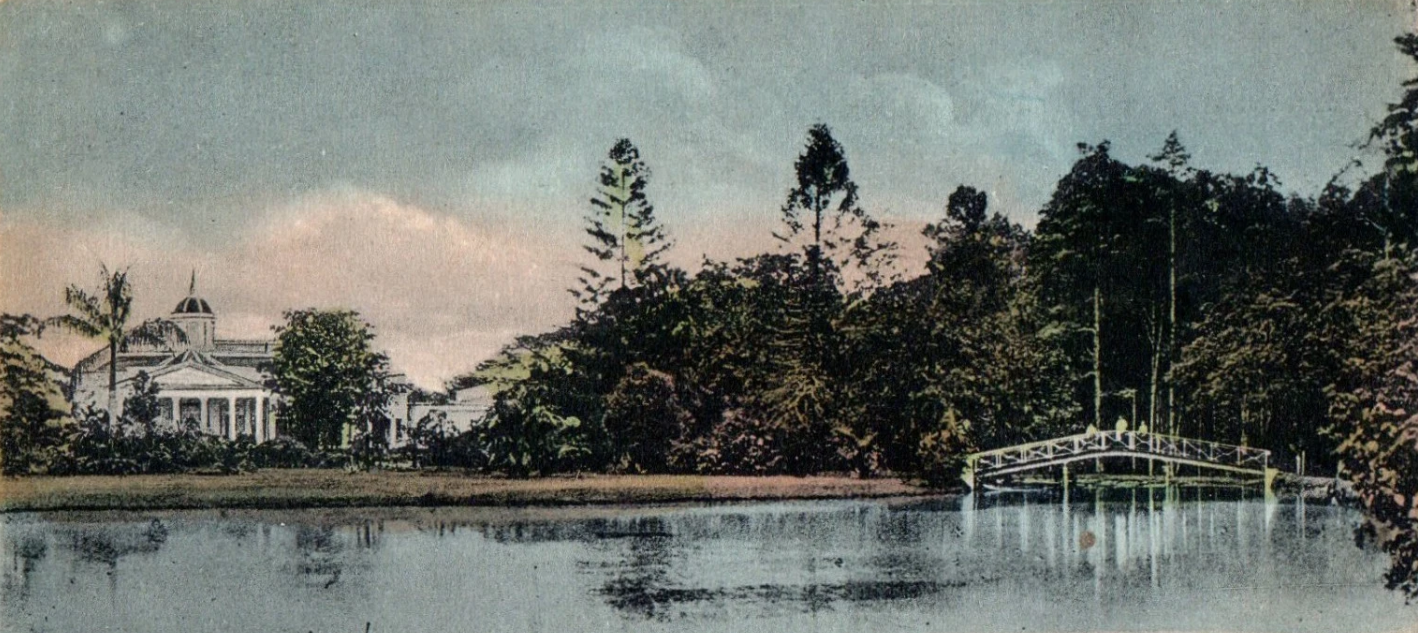
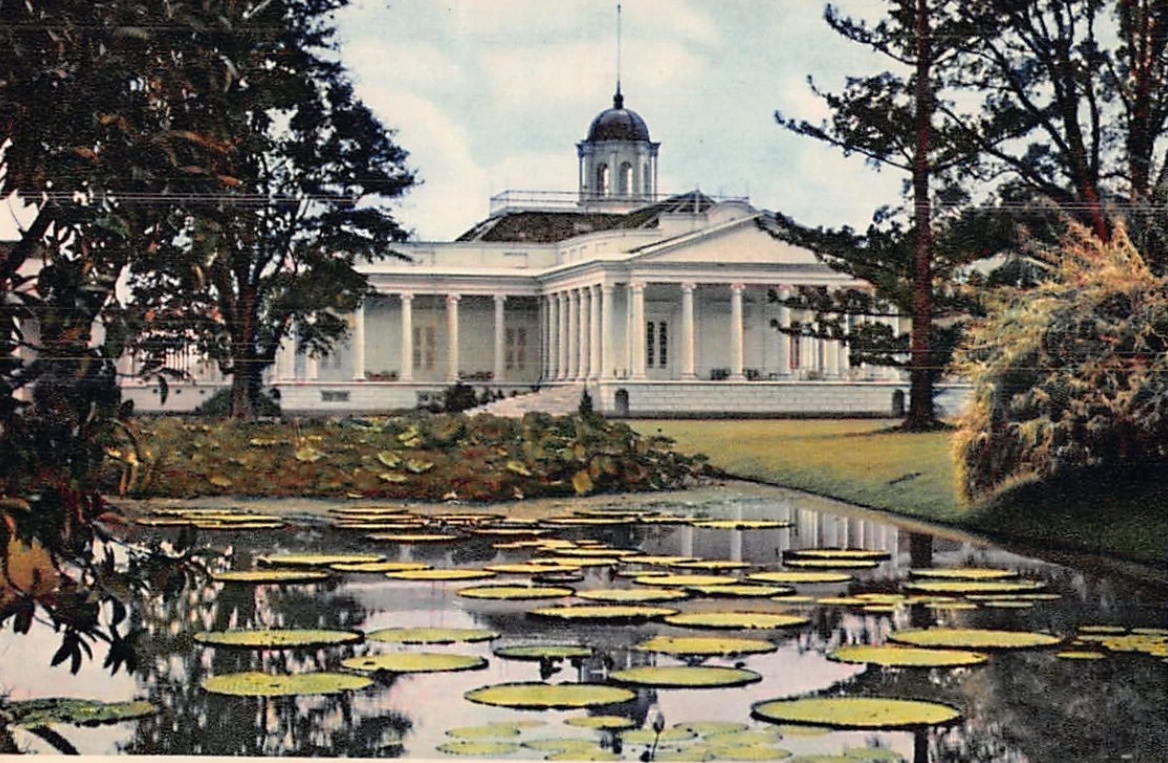
Postcard of the Palace of the Governor-General of Buitenzorg (de Voorzorg, c.1910)
Formalized Order
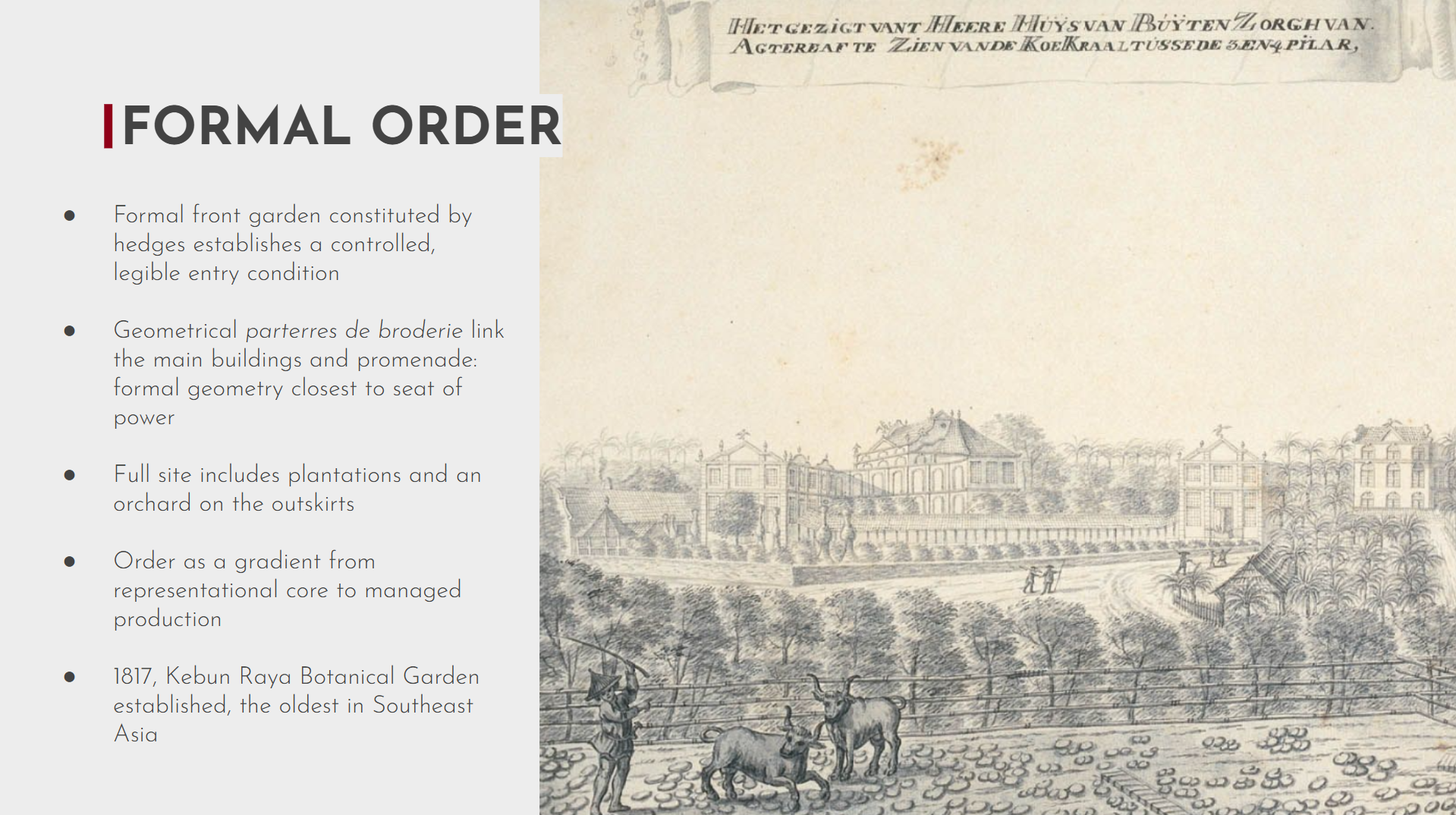
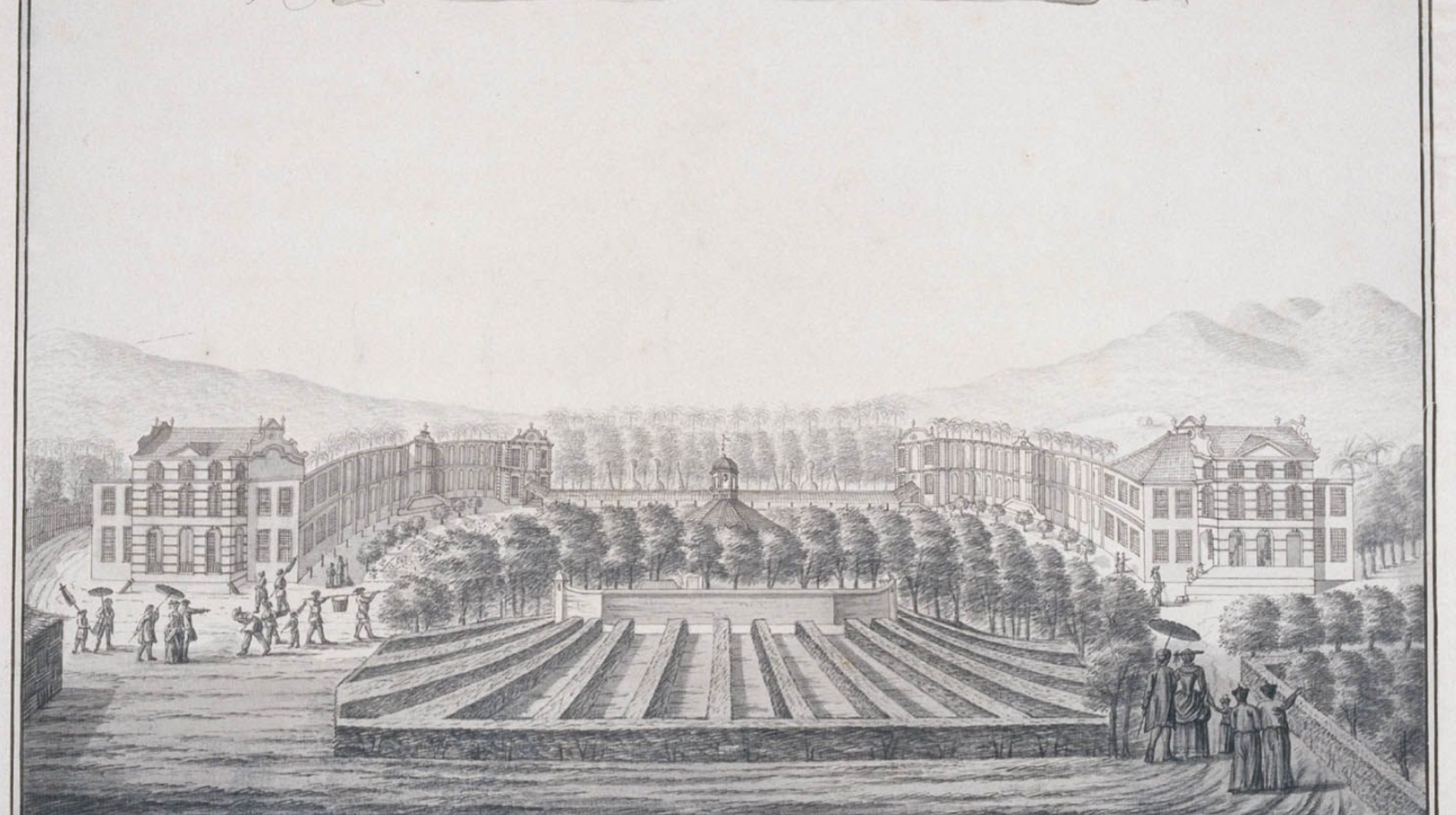
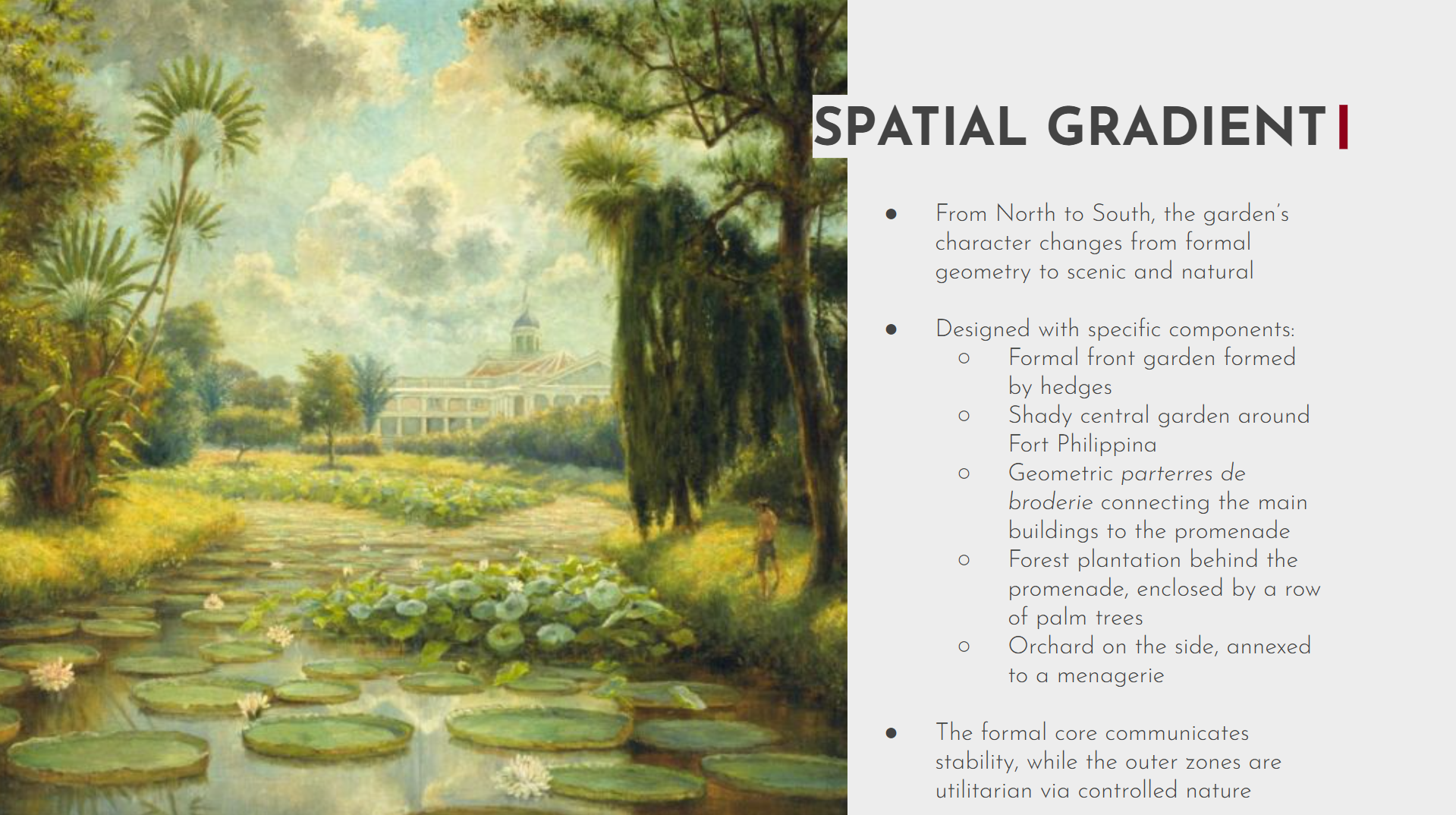
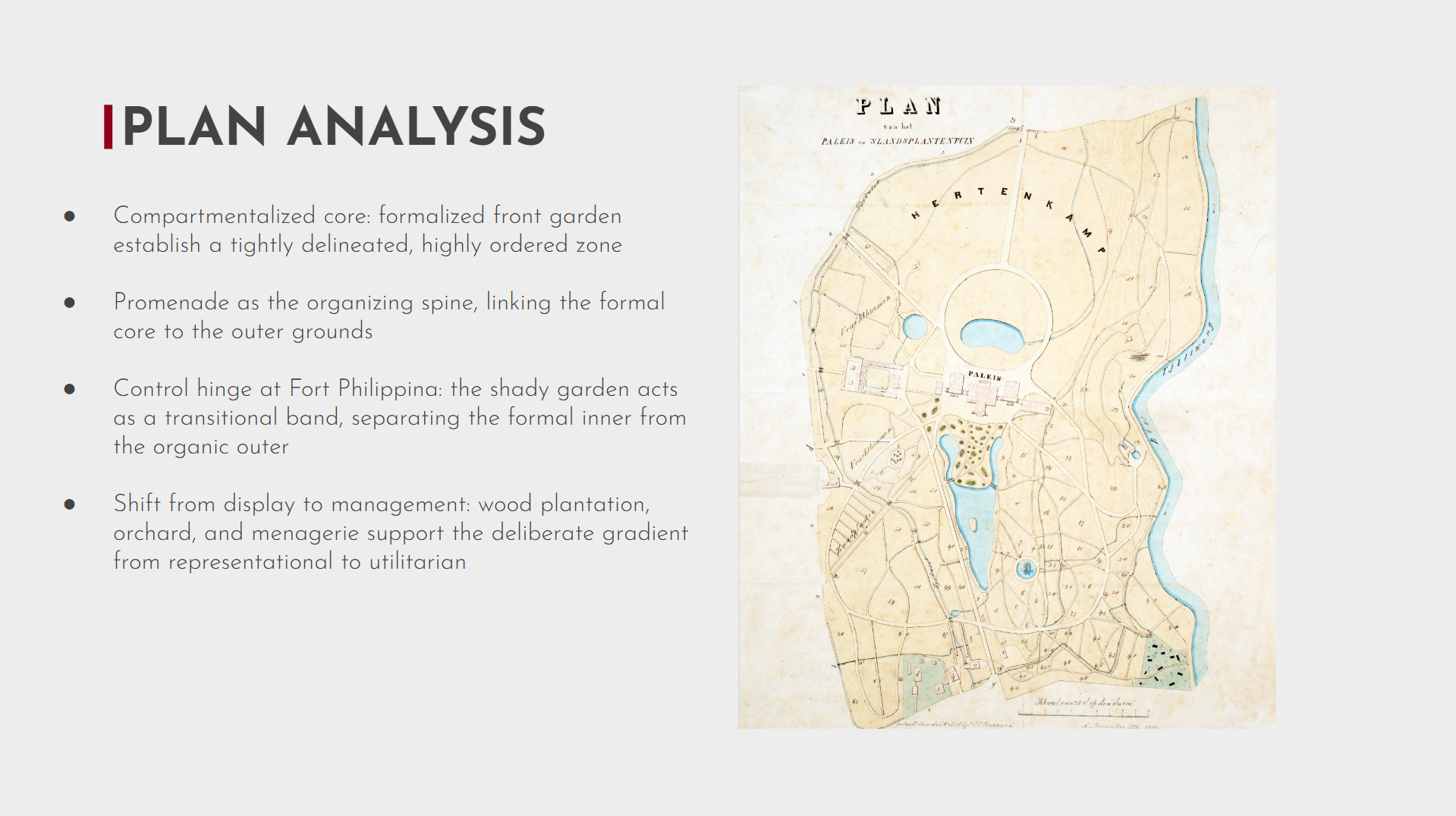
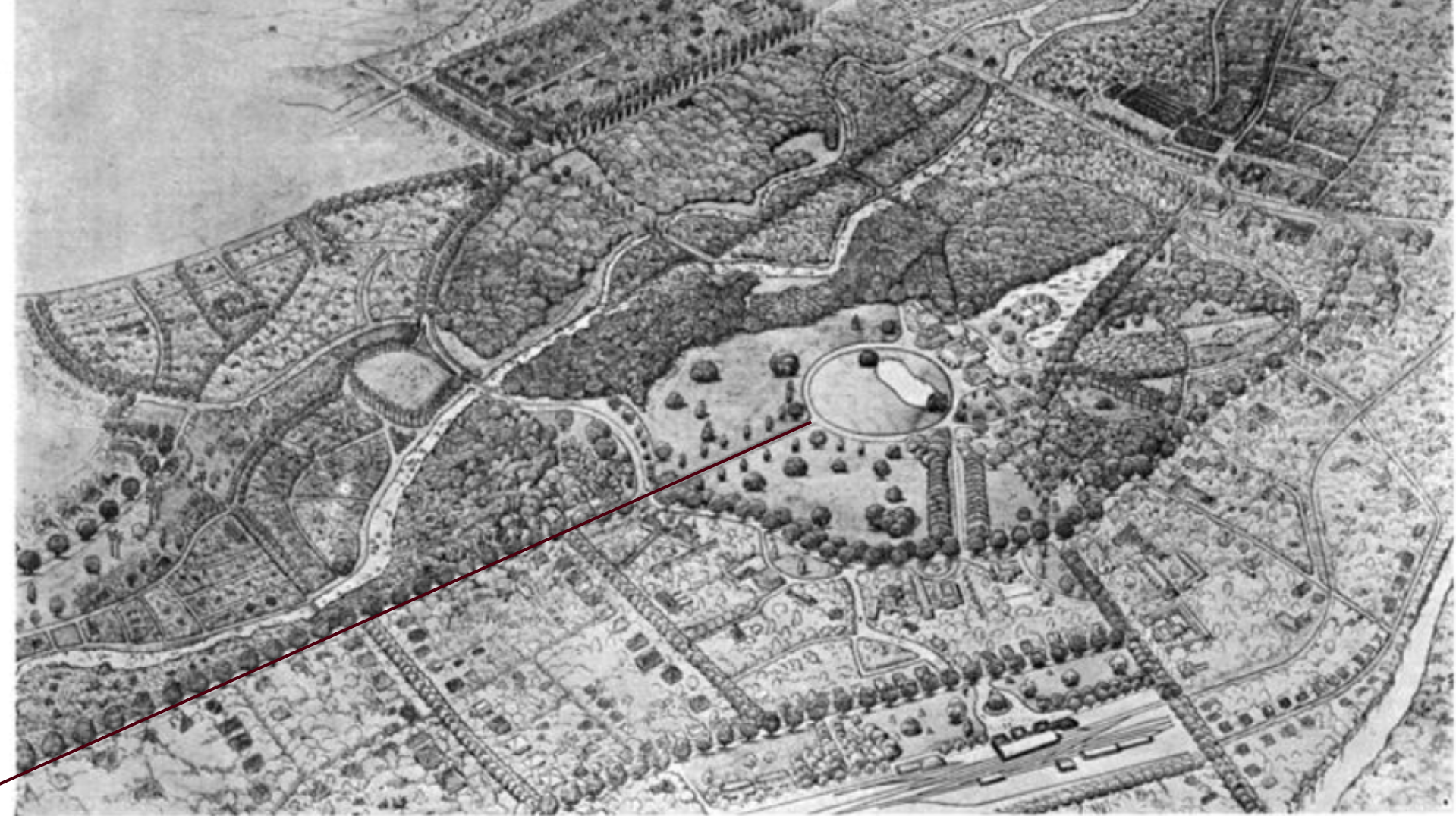
Formal gardens operate as systems of legibility, geometry, and maintained edges; their purpose is to make order visible on the ground, then keep it visible through symmetry, axes, clipped vegetation, and controlled foregrounds that extend the residence’s authority into space (The Metropolitan Museum of Art, 2003). At Buitenzorg, that Baroque language concentrates at the residence-facing core: a formal hedge garden and parterres de broderie set as a disciplined threshold to power, tied directly to the main buildings and promenade (Oldenburger-Ebbers, 1999). The site is not stylistically pure. Moving outward, the estate shifts from geometrical formality toward scenic and “natural” character, with later interventions associated with an English landscape mode that softens edges and trades strict parterre logic for park-like composition (Oldenburger-Ebbers, 1999; Bogor Botanical Gardens, n.d.). Productive and institutional layers sit alongside both: orchards and plantations fold utility into the estate, while the adjacent botanical garden extends control from aesthetics into collection, acclimatization, and experimentation, treating tropical nature as something to be managed and made legible (Oldenburger-Ebbers, 1999; UNESCO World Heritage Centre, n.d.; Wereldmuseum Leiden, n.d.).
At Buitenzorg, the landscape is not incidental planting around a house. It is a structured system in which the message begins at the threshold and intensifies toward the residence: the closer the ground comes to authority, the more controlled it becomes, turning proximity into a measure of status (Oldenburger-Ebbers, 1999). In a tropical setting, that control is never passive. The estate’s clipped edges and patterned beds require continuous maintenance, which means the order on display is also a display of capacity, the workforce, routines, and resources required to keep growth from spilling past its boundaries (Oldenburger-Ebbers, 1999). The plan then distributes control across the larger grounds through compartment and gradient: beyond the formal front and thezones, and then shifts toward more scenic character in the south (Oldenburger-Ebbers, 1999). Authority does not disappear in that transition; it changes tone. Command sits at the center, and the outer landscape makes that command feel natural, calm, and ordained, while productive grounds quietly anchor leisure to managed land and labor. shaded middle garden, the estate extends into plantation, orchard, and menagerie
-
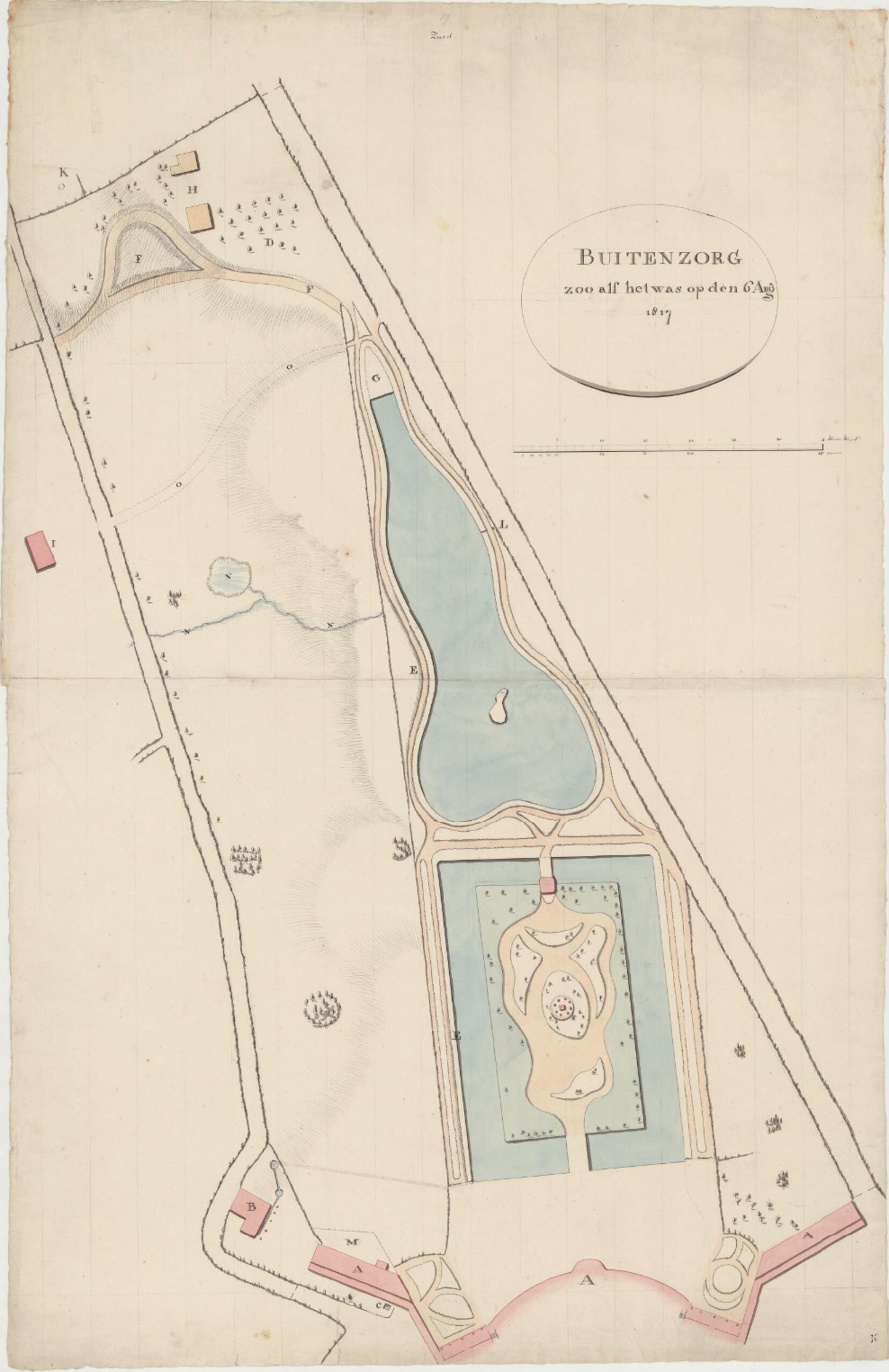
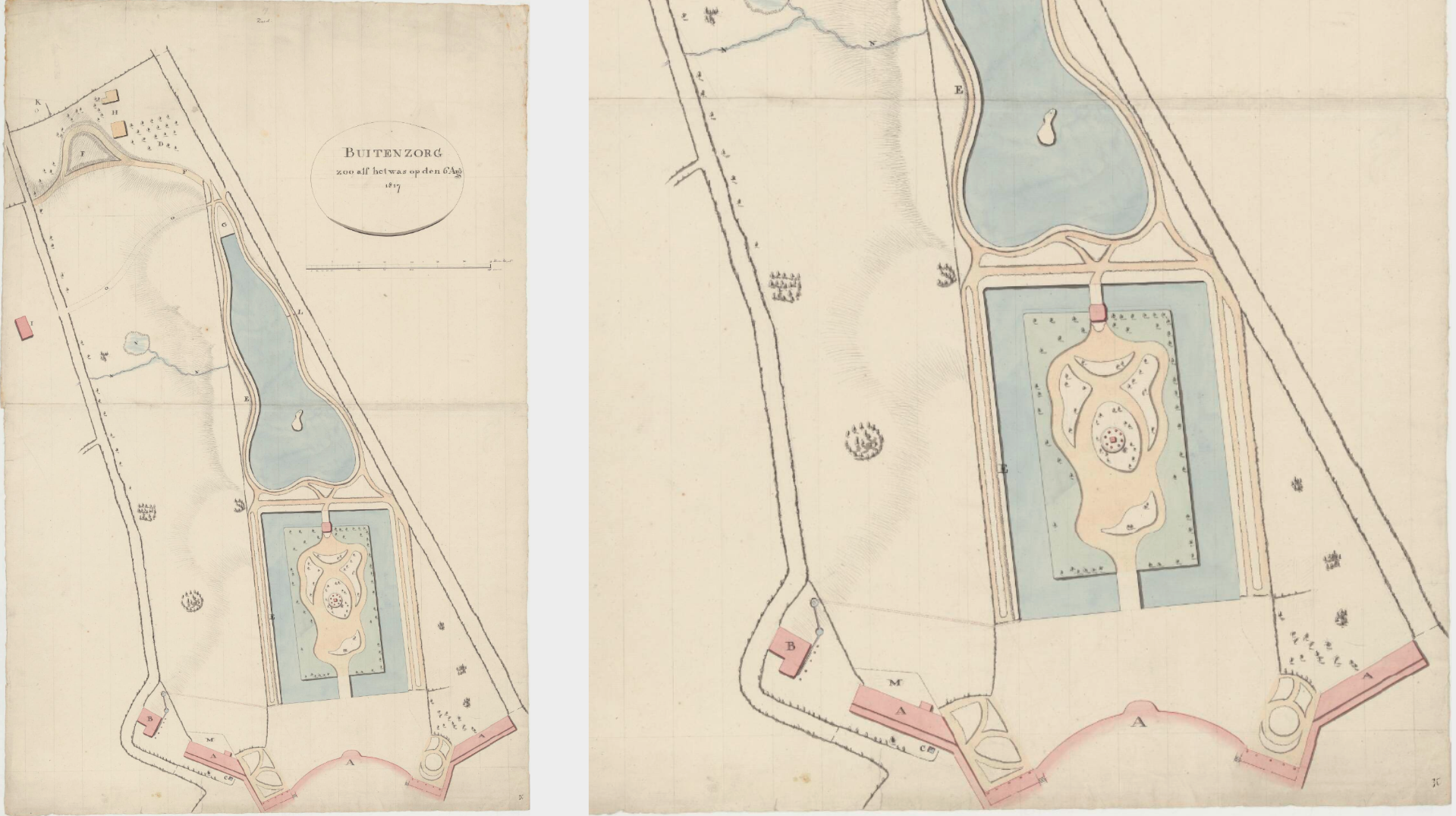
Map of “Buitenzorg, as it was on August 6, 1817” (National Archief, n.d.)
-
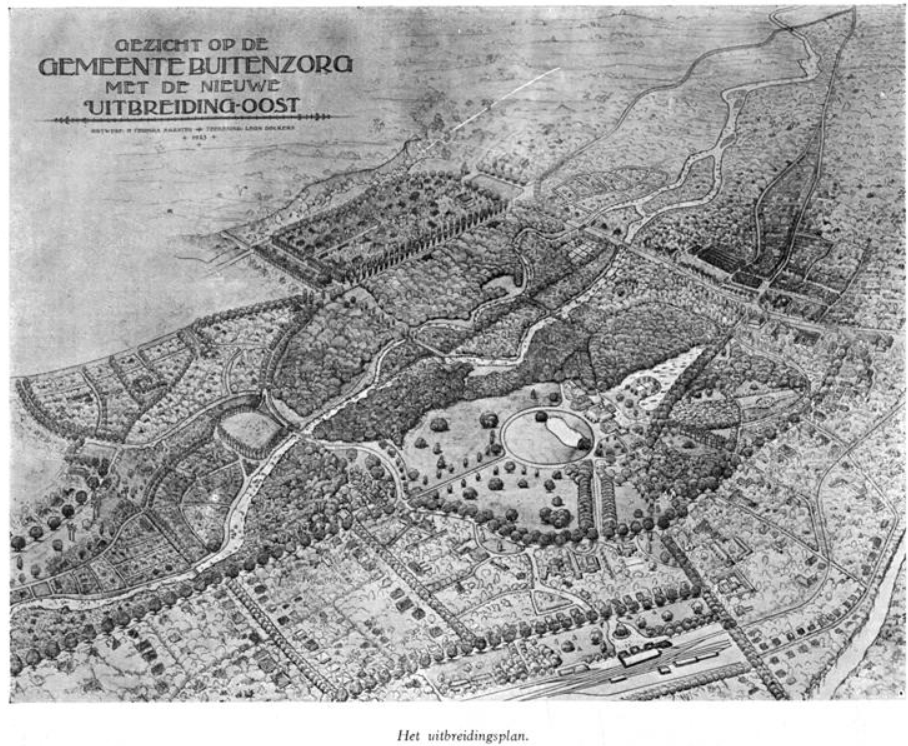
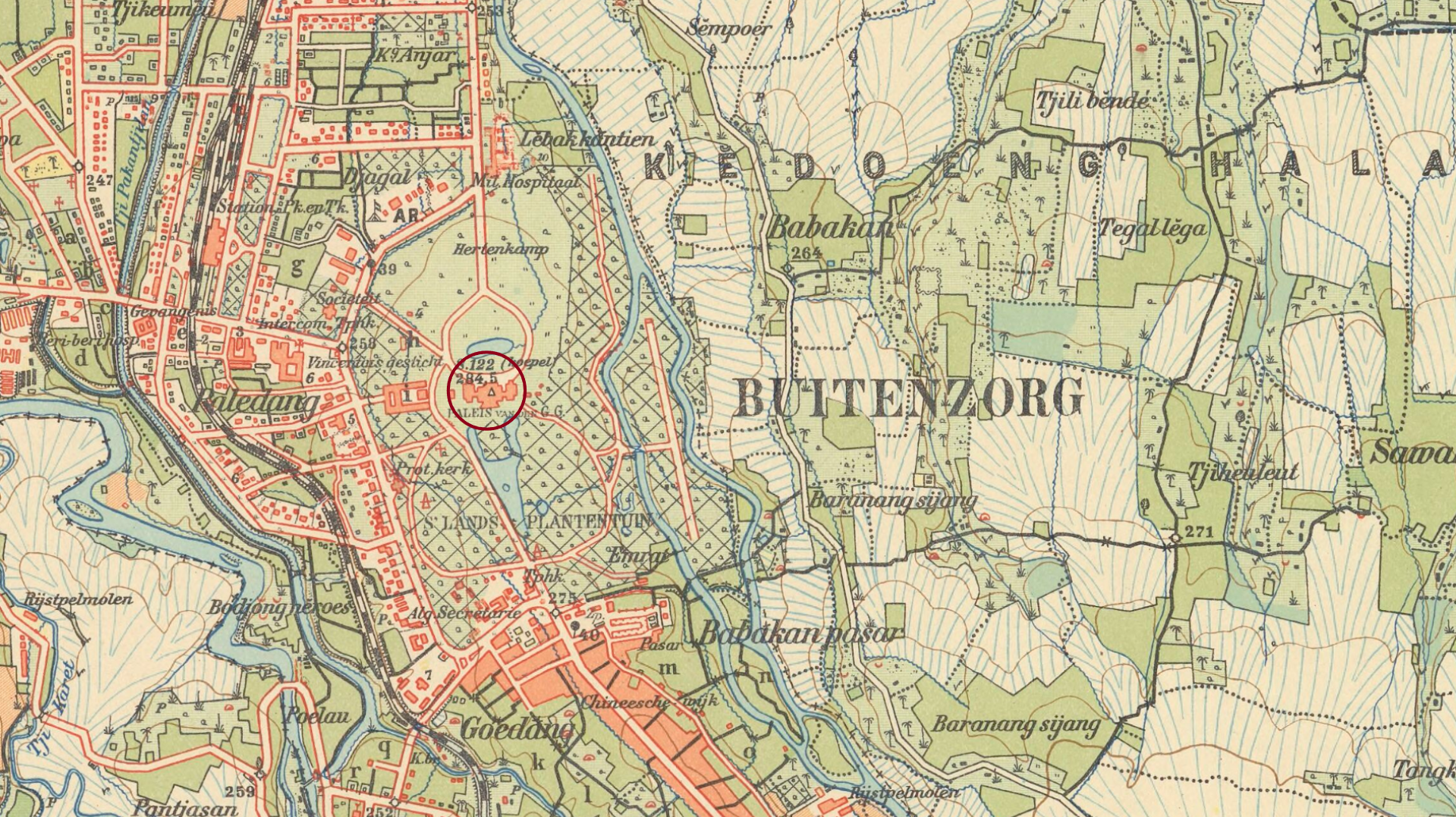
Supervision of the Municipality of Buitenzorg with the New Eastern Extension (Karsten, 1917)
-
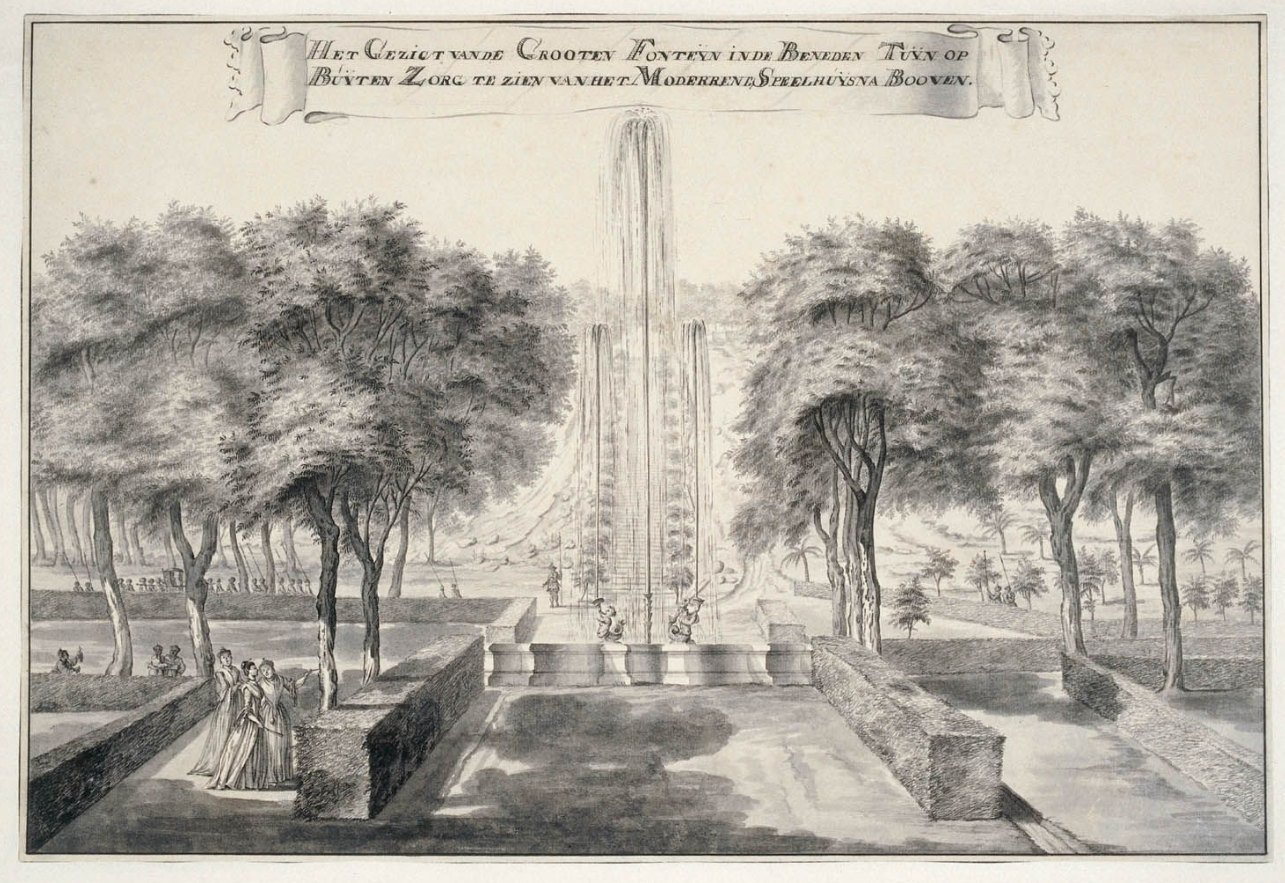
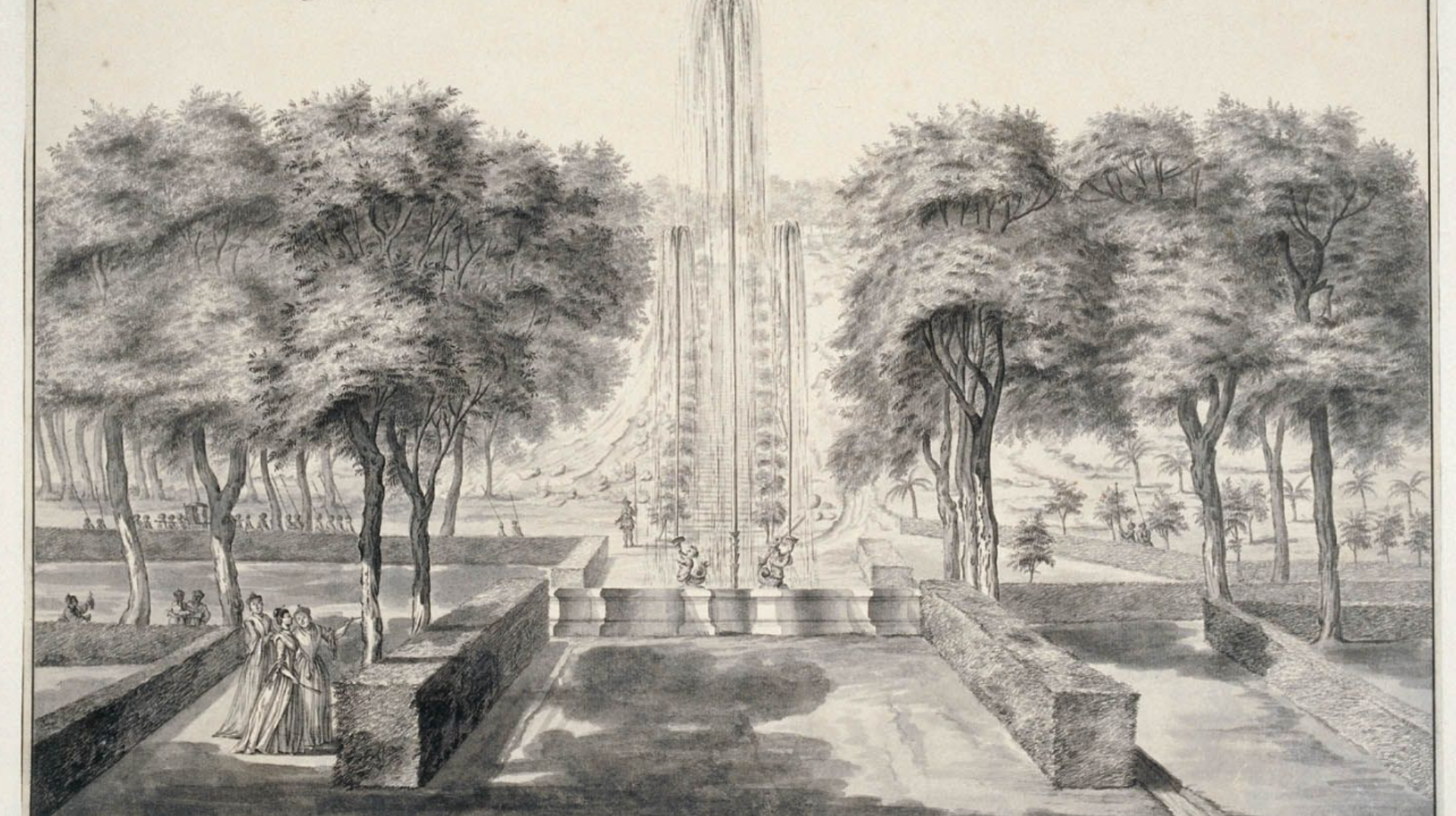
View of the estate and fountain at Buitenzorg (Rach, 1770-2)
Circulation and Controlled Vistas
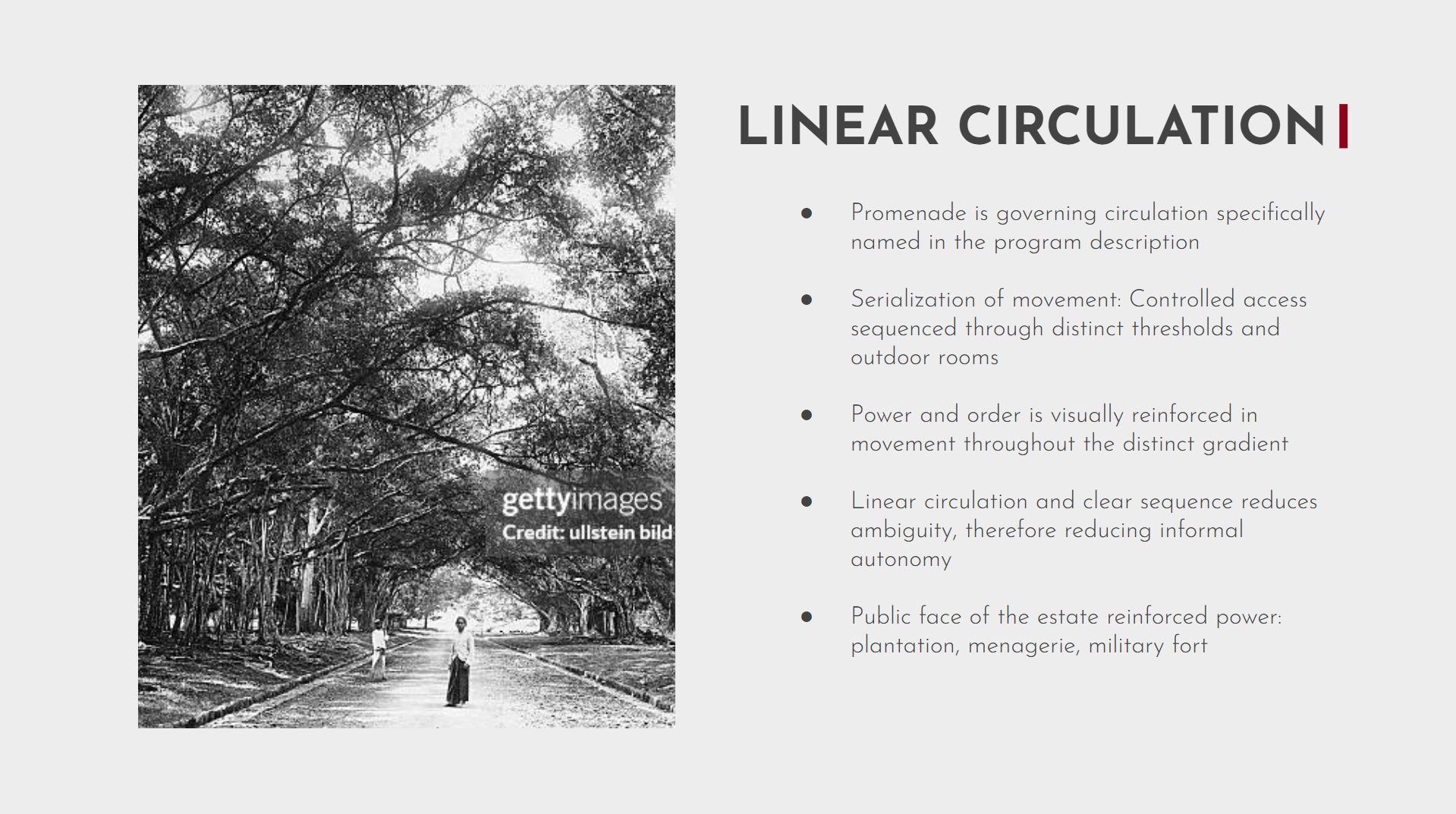
If plan order assigns hierarchy to space, circulation assigns hierarchy to bodies. Movement is one of the landscape’s sharpest tools because it governs encounter: it decides how one arrives, what one meets first, what one is allowed to approach, and where one is expected to pause. At Buitenzorg, a promenade is explicitly tied to the main buildings and the formal garden components (Oldenburger-Ebbers, 1999). That connection turns walking into choreography. The route is not neutral, but is a sequence designed to produce a particular experience of authority: measured approach, controlled proximity, and repeated contact with formal order.
Thresholds do a quieter kind of enforcement. The described sequence, hedged front garden, then geometrical parterres, promenade, and finally outward zones including productive and curated landscapes, creates transitions that sort space by intensity of control (Oldenburger-Ebbers, 1999). Under colonial hierarchy, those transitions align readily with social sorting. Who belongs near the residence, who can remain at the edges, who moves freely, and who moves in service becomes a spatial logic that needs no signage beyond the overt threshold of transition. The form teaches, reinforces, and codifies behavior.
Circulation is critical for control because comfort is not only provided. Comfort is cultivated and staged. A landscape that can choreograph movement can choreograph deference, and deference becomes routine when it is built into the path.
Power also wants attention trained. Formal garden traditions rely on geometry, symmetry, disciplined vegetation, and controlled visual experience, producing predictable scenes that can be repeated, then believed (The Metropolitan Museum of Art, 2003). Vistas are not scenery but propaganda.
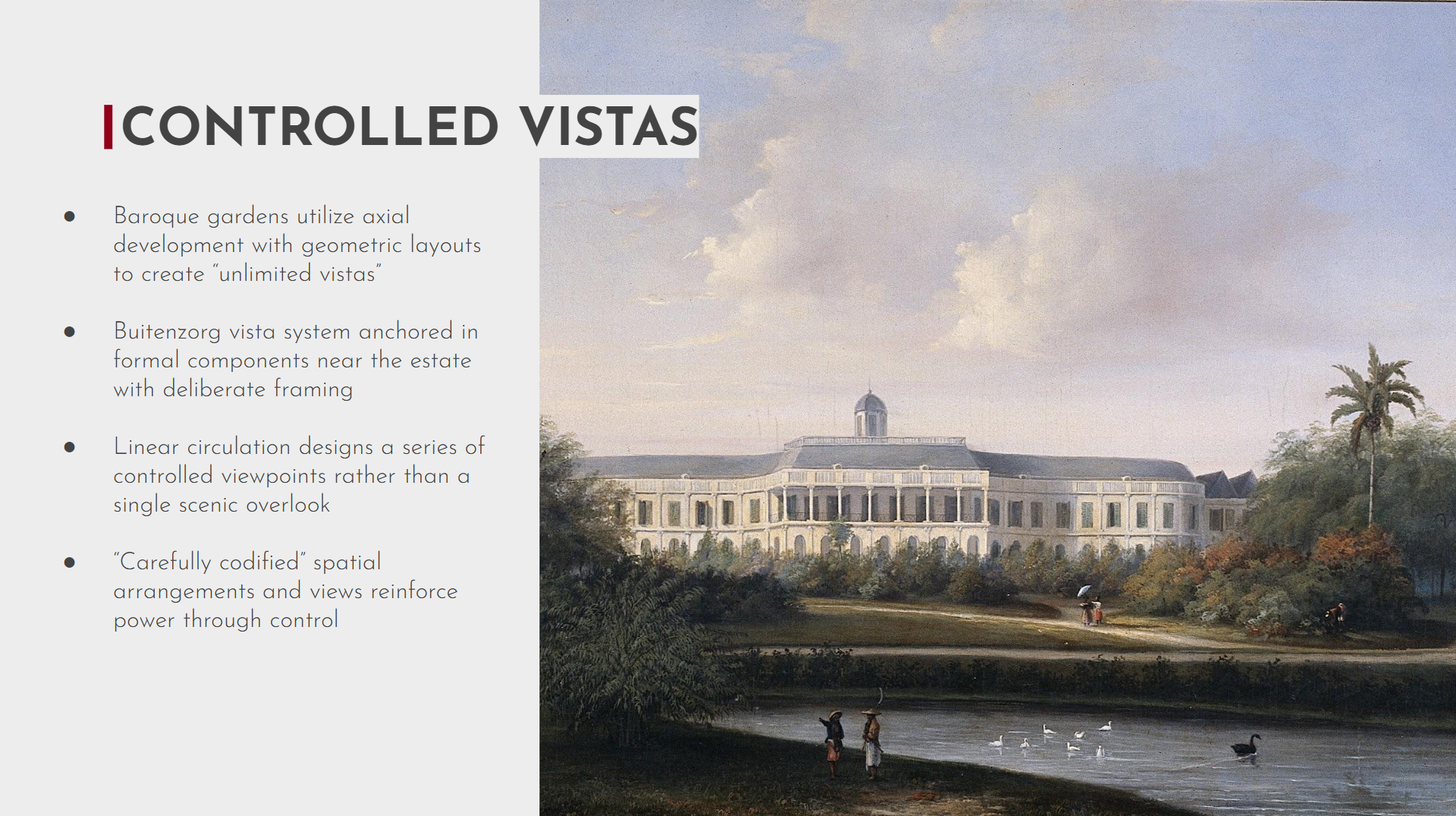
The parterres and promenade linked to the main buildings suggest view-making at the core of the estate, a system that can repeatedly center order and place the residence as a visual anchor (Oldenburger-Ebbers, 1999). That repeated centering has political implication: coherence in the view becomes coherence in the political imagination. When the eye meets an environment that looks stable, balanced, and maintained, stability begins to feel like the natural state of the world.
The north-to-south shift from formal geometry to scenic and natural character intensifies the persuasion (Oldenburger-Ebbers, 1999). The landscape can relax its strictness without surrendering authorship, then let control dissipate into atmosphere. Authority becomes less overtly visible and more covertly embedded, which often makes it more durable. The estate becomes a lesson that order belongs here, not because it is forced, but simply because it looks right.
Circulation and vistas work together: the path places the body where the view can do its work, then the view returns the body to the logic of the path. Comfort stabilizes authority by making that loop feel pleasant and unavoidable.
-
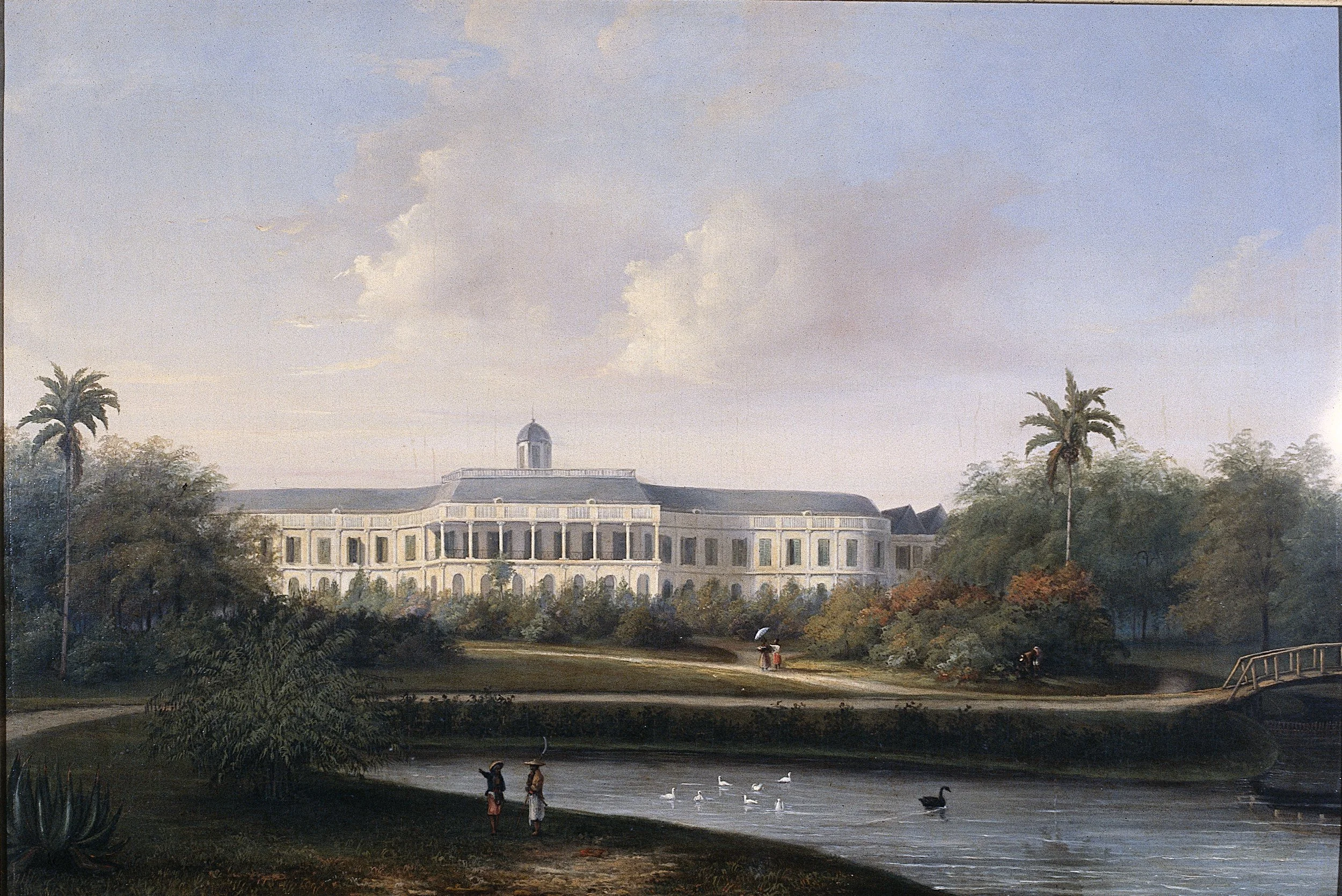
The Back of the Palace at Buitenzorg Before the Earthquake of October 10, 1834 (Troost, 1834-6)
-
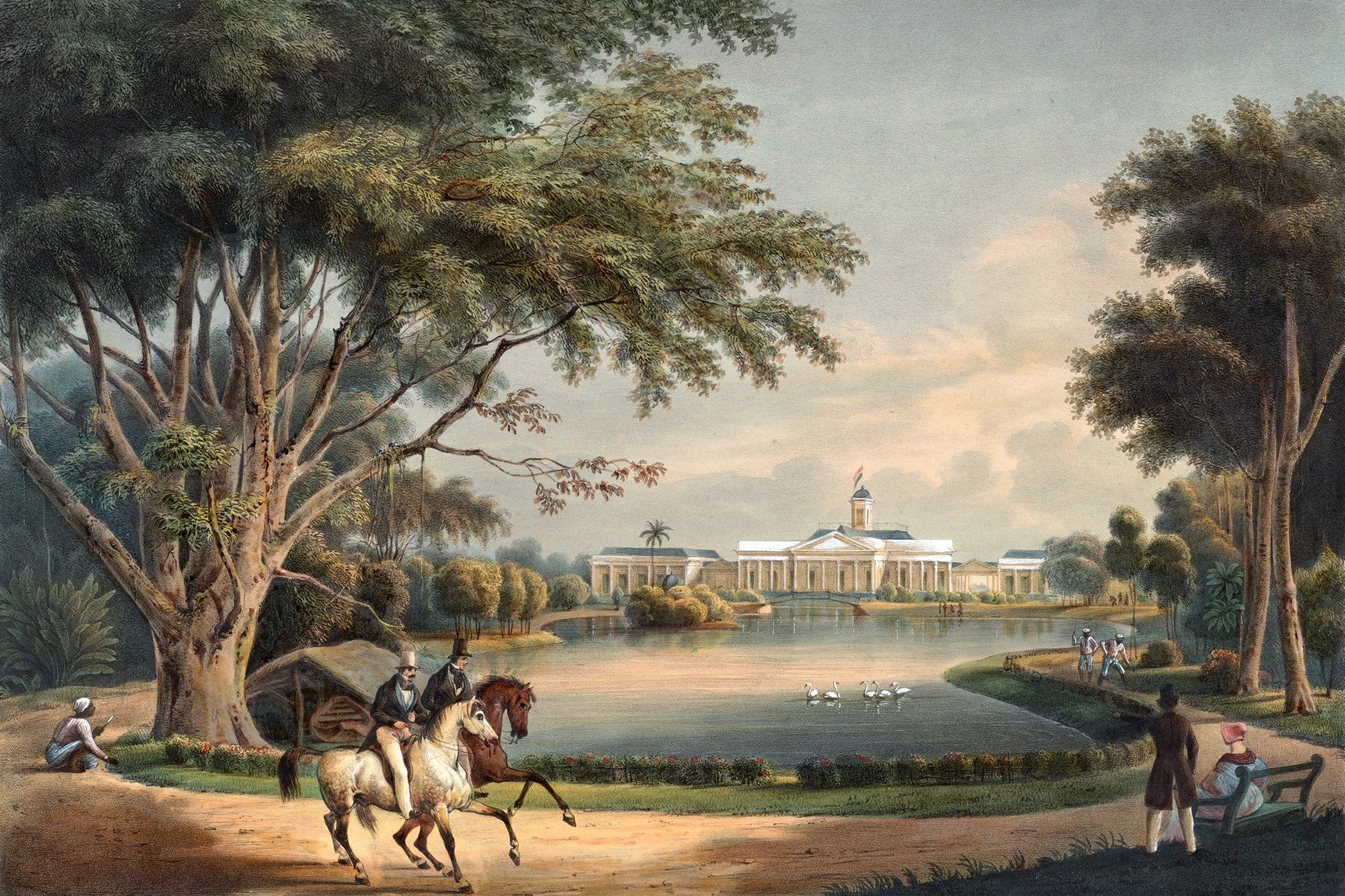
View of Buitenzorg Palace, Taken from the Park (Bik, 1842)
-
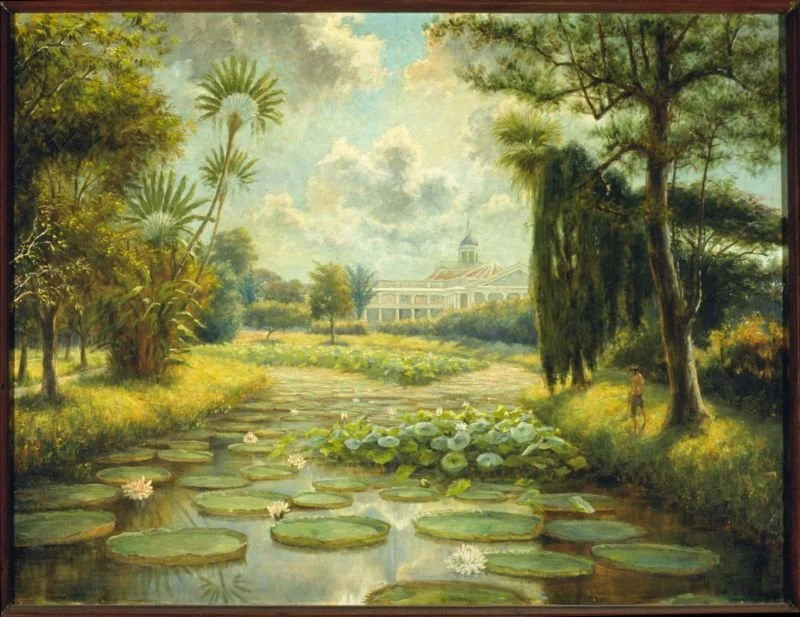
Oil Painting Depicting the Botanical Garden at Buitenzorg (Fleischer, c. 1900)
Military and Social Enforcement
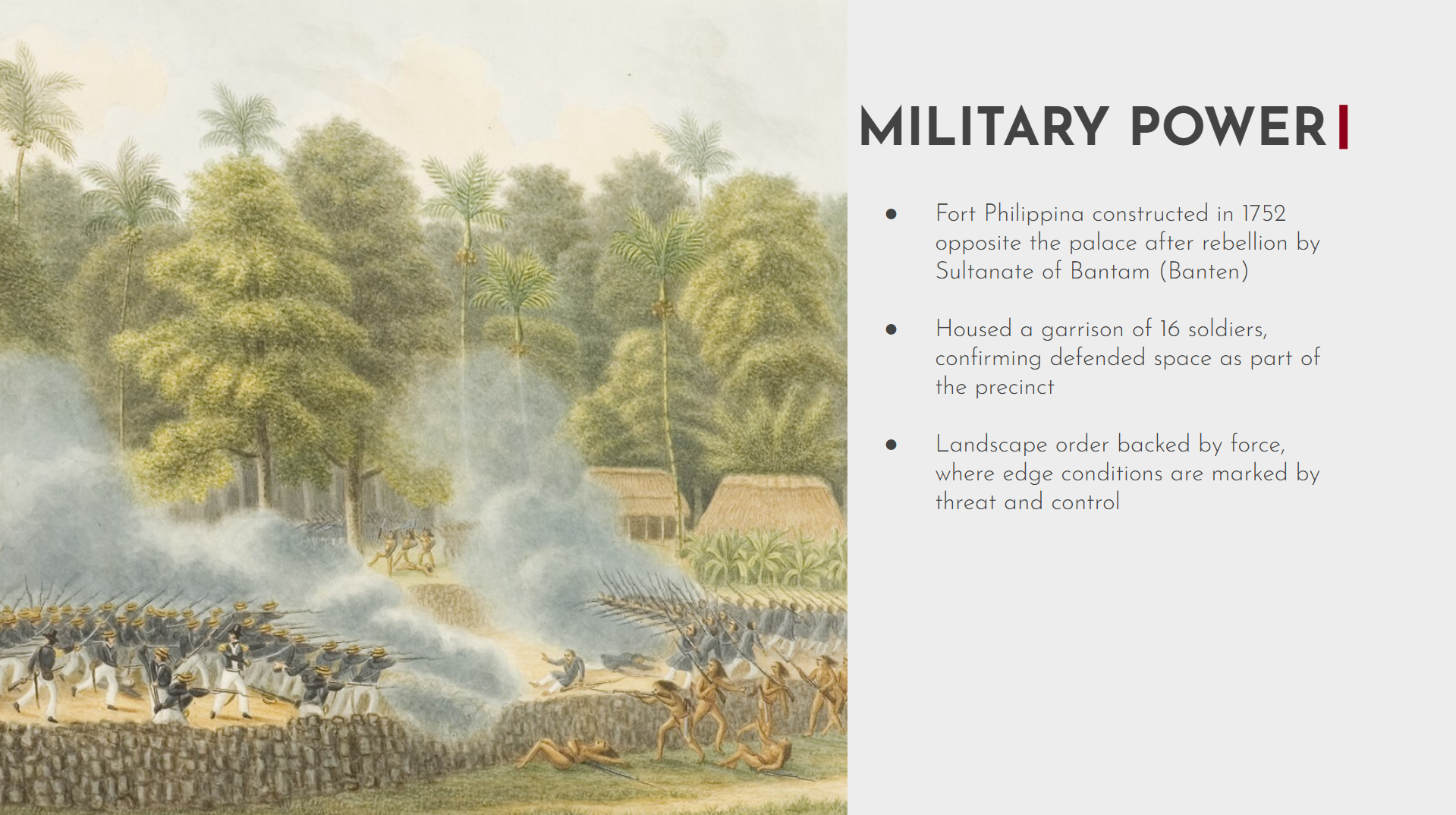
Comfort does not stabilize authority on its own. Comfort stabilizes authority when it is exclusive, and exclusivity depends on enforceable boundarie. Fort Philippina was built opposite the palace after an indigenous uprising, intended to protect the estate and squash any radical independence effort (Atlas of Mutual Heritage, n.d.). It was just a small garrison of sixteen soldiers (Atlas of Mutual Heritage, n.d.). But the scale is not nearly as influential as the placement. The retreat sits across from an instrument of force, visible enough to remind anyone approaching that serenity has conditions.
Colonial authority in the region relied on organizational and military capacity to impose conditions and sustain control (Encyclopaedia Britannica, n.d.). The fort is not a side note to the garden, but is the very infrastructure that allows the garden to remain uninterrupted, maintained, and calm. The estate can perform stability because instability can be met and handled.
That enforcement layer deepens the social logic of the site. Colonial society was structured through sharp class differences, with Europeans occupying the dominant strata and indigenous “inlanders” relegated far beneath them (Verzetsmuseum Amsterdam, n.d.). At an estate like Buitenzorg, hierarchy becomes lived as access and visibility. The formal core and promenade concentrate privilege and spectacle while service and labor can remain peripheral, timed, or concealed, sustaining a scene that looks effortless precisely because effort is hidden outside the frame.
This is not simply about exclusion, but rather normalization. Spatial order makes hierarchy feel like etiquette, and the military presence makes etiquette enforceable at gunpoint. The garden becomes a place where authority can look calm because authority can act harshly when needed, but removed from the central seat of power. Comfort stabilizes authority because comfort is protected.
-
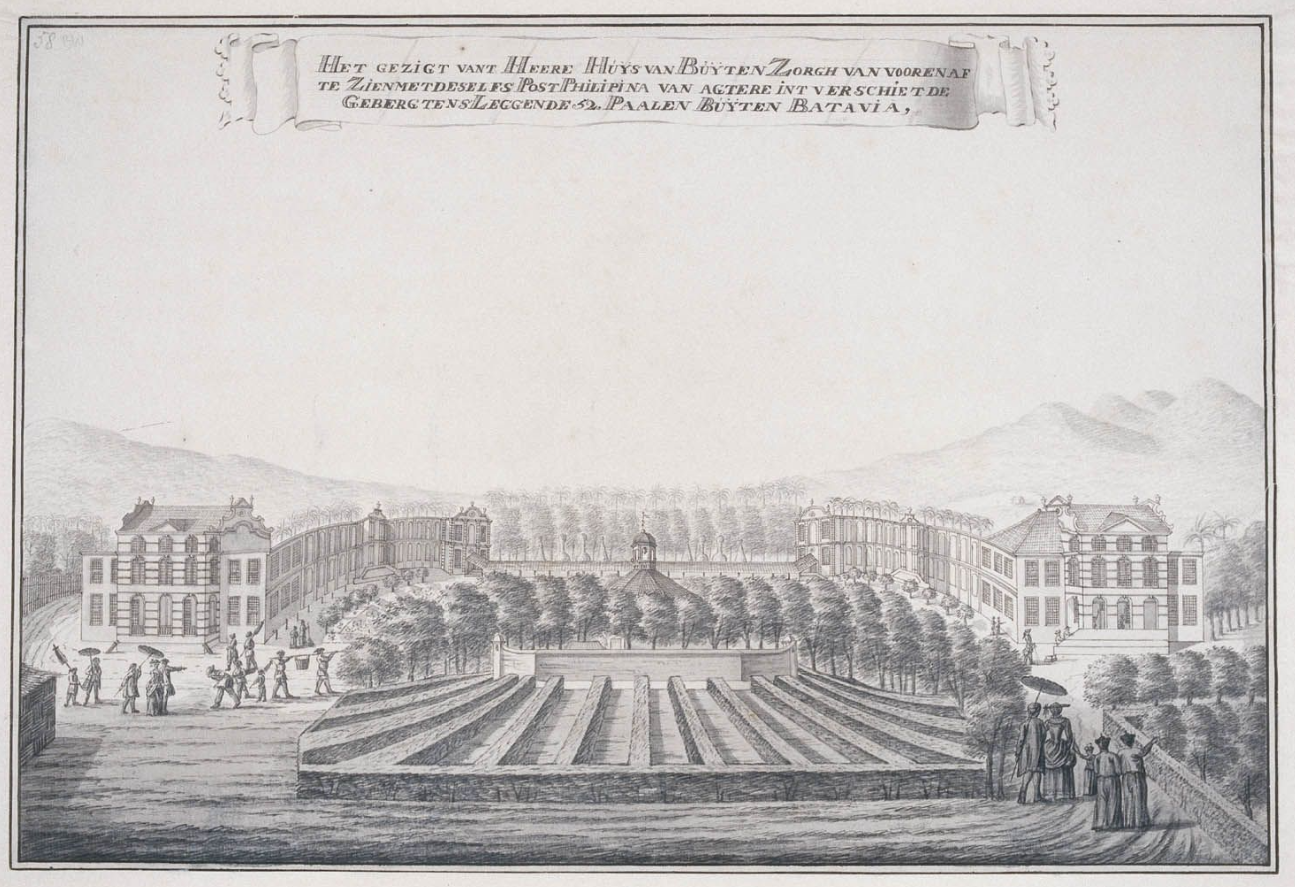
“Two villas, each measuring 30 by 15 metres, can be seen behind a little fort” (Rach, 1772)
Enforced Ecologies
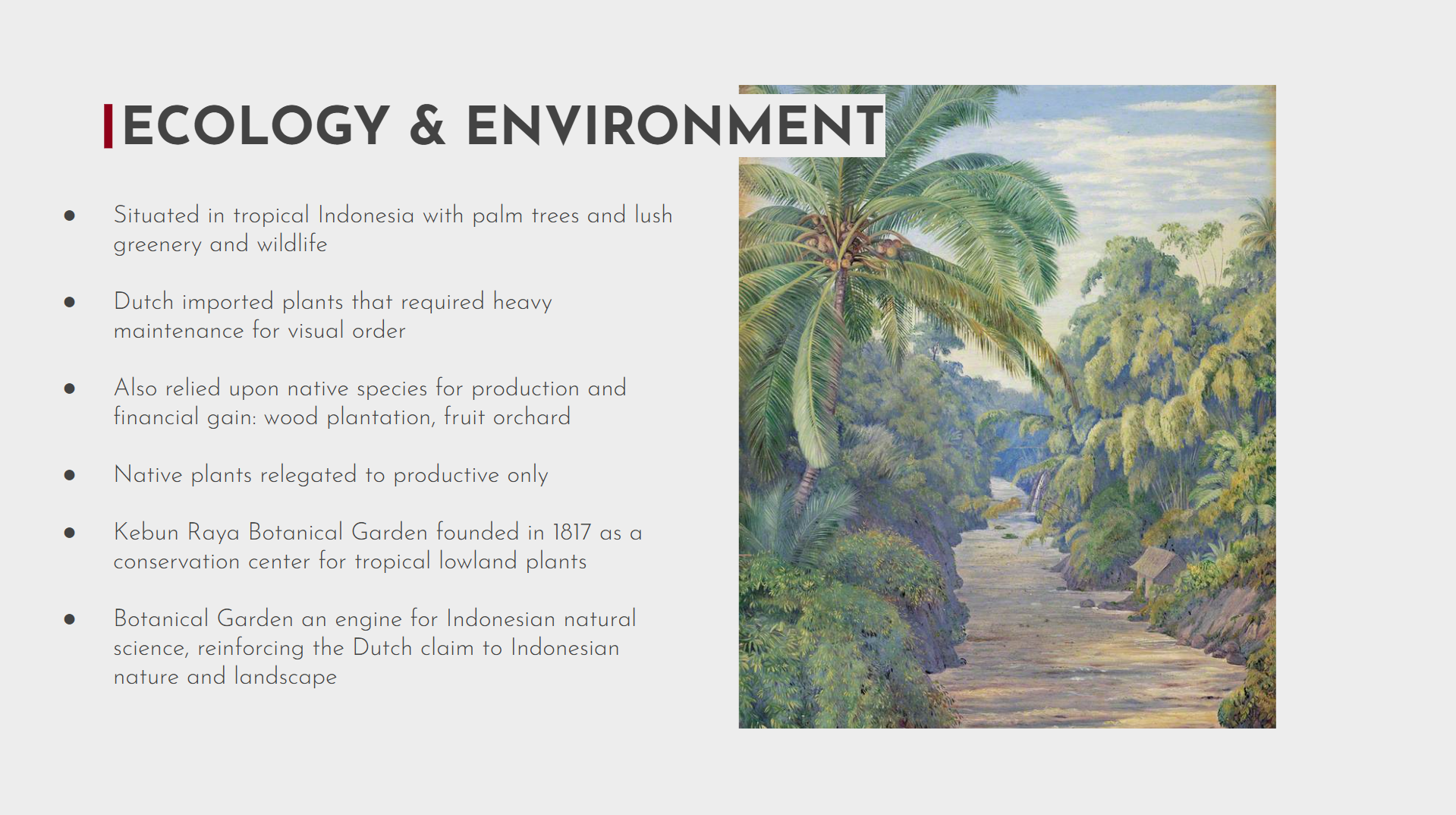
Buitenzorg governs nature through multiple regimes at once: ornament, production, and knowledge. Each regime is a form of control that requires capacity. Each regime produces visible, tangible, and often financial evidence that the colonial state can manage tropical abundance.
Ornamental control is clearest in the formal core. Hedges and broderie parterres require continuous trimming and maintenance (Oldenburger-Ebbers, 1999). In a tropical climate, maintenance becomes a higher-stakes performance because the environment pushes back faster. A straight hedge line is not simply an aesthetic preference. Instead, it is a repeated demonstration: growth will be cut into rule.
Productive control appears in the estate program through plantation and orchard zones (Oldenburger-Ebbers, 1999). These zones bind the retreat to colonial extraction logic. The codified compulsory cultivation or labor obligations not only enabled financial success, but demonstrated how governance could reorganize land toward export value as policy (Encyclopaedia Britannica, 2026). A colonial estate that includes plantation and orchard zones carries the grammar of managed land, and that grammar aligns with the broader political economy of rule.
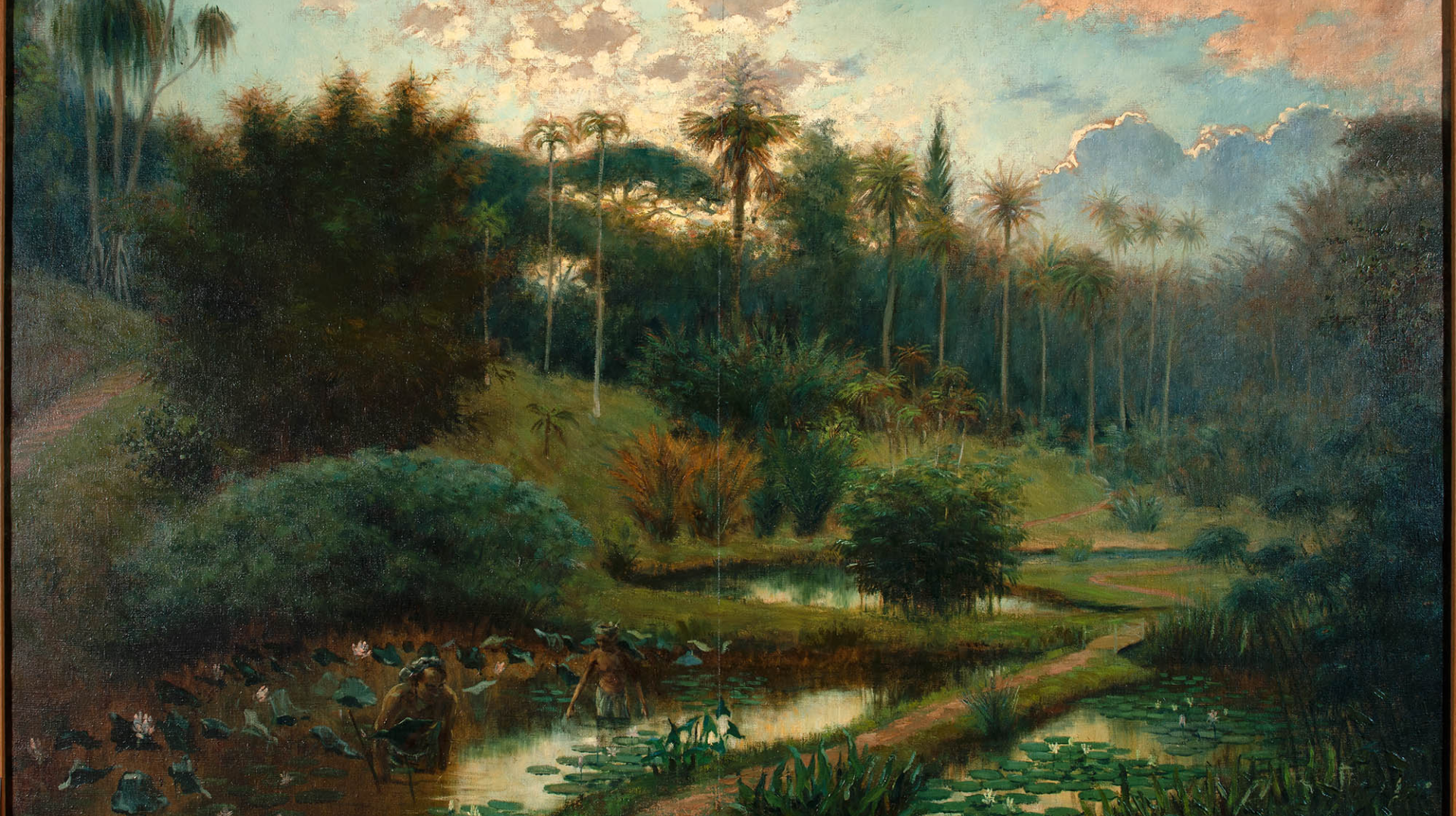
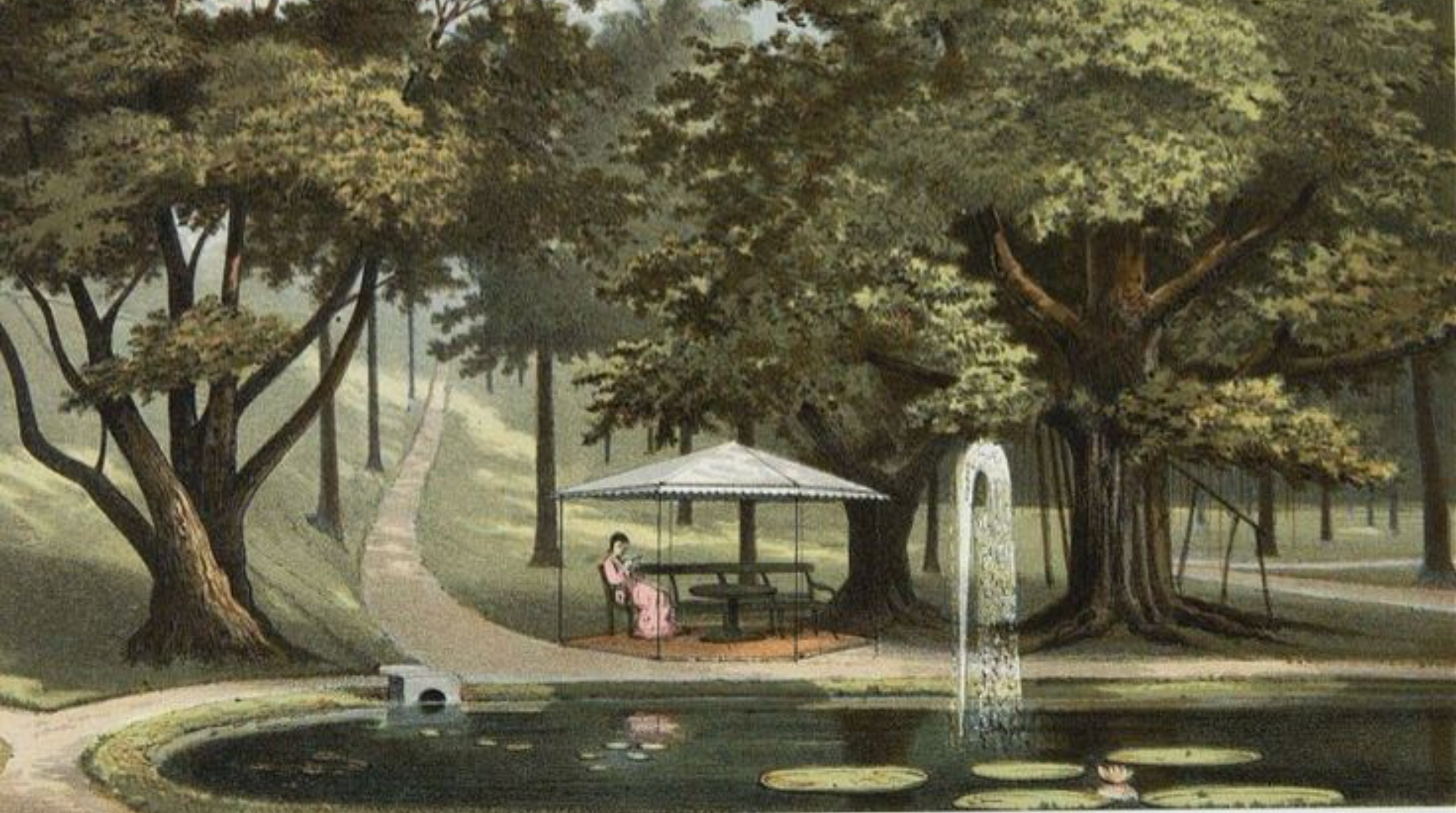
Scientific control sits adjacent, and it expands the precinct’s power over ecology into classification and experimentation. Kebun Raya Bogor, the renowned botanical garden established in 1817, is recognized for ex situ conservation and scientific value on Indonesia’s UNESCO Tentative List (UNESCO World Heritage Centre, n.d.). Its early purpose centered on cultivation, acclimatization, and testing plants for economic use, including plants brought from elsewhere, which turns tropical nature into a managed inventory (Wereldmuseum, n.d.). Imported plants become living evidence of routes, networks, and administrative reach. Mobility of specimens mirrors mobility of power.
Together, these ecological regimes work to stabilize authority by making control feel benevolent. Ornament shows discipline, production shows value, science shows competence. All three can be used to justify hierarchy by implying that the ruling system is the system that knows how to dominate the land.
-
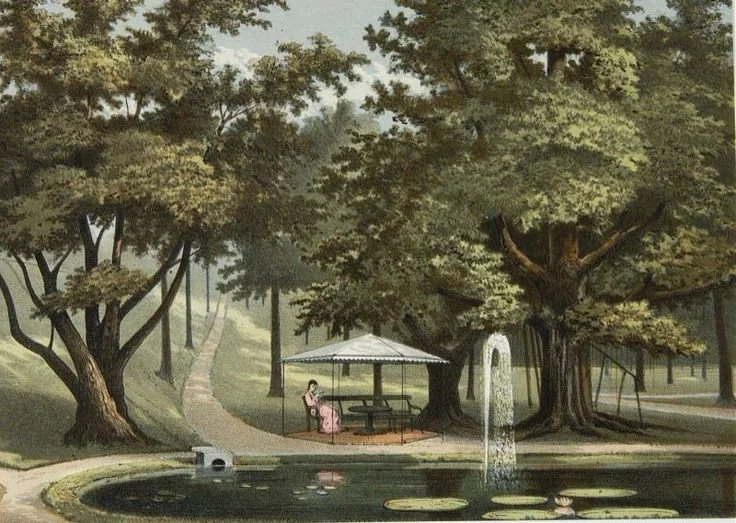
A Pond with a Fountain in the Botanical Garden of Buitenzorg (Rappard, c. 1882-9)
Conclusion
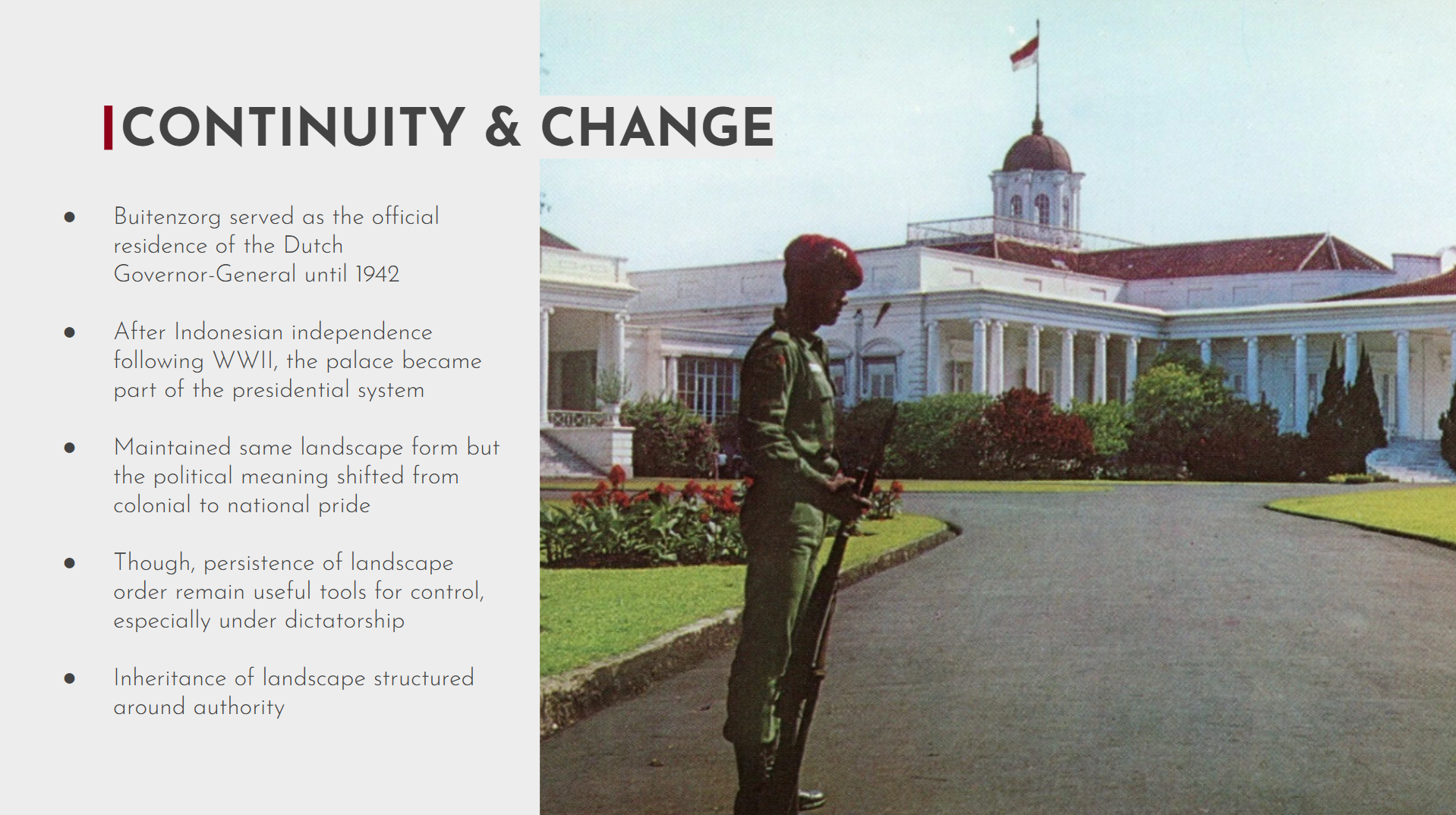
Sovereignty changes, but landscapes remain. Istana Bogor has since become a presidential complex and national property under the independent state (Kementerian Sekretariat Negara Republik Indonesia, n.d.). The climate logic, estate scale, and ceremonial potential remain. A landscape built to perform stability can be repurposed to perform stability again, even when the regime that built it no longer rules.
That repurposing does not erase the form’s history. Formal order still concentrates attention, promenades still choreograph encounter, and vistas still train the eye toward coherence. A defended precinct still implies controlled access, while productive and scientific landscapes still imply management capacity. These are durable spatial technologies that persist because they work.
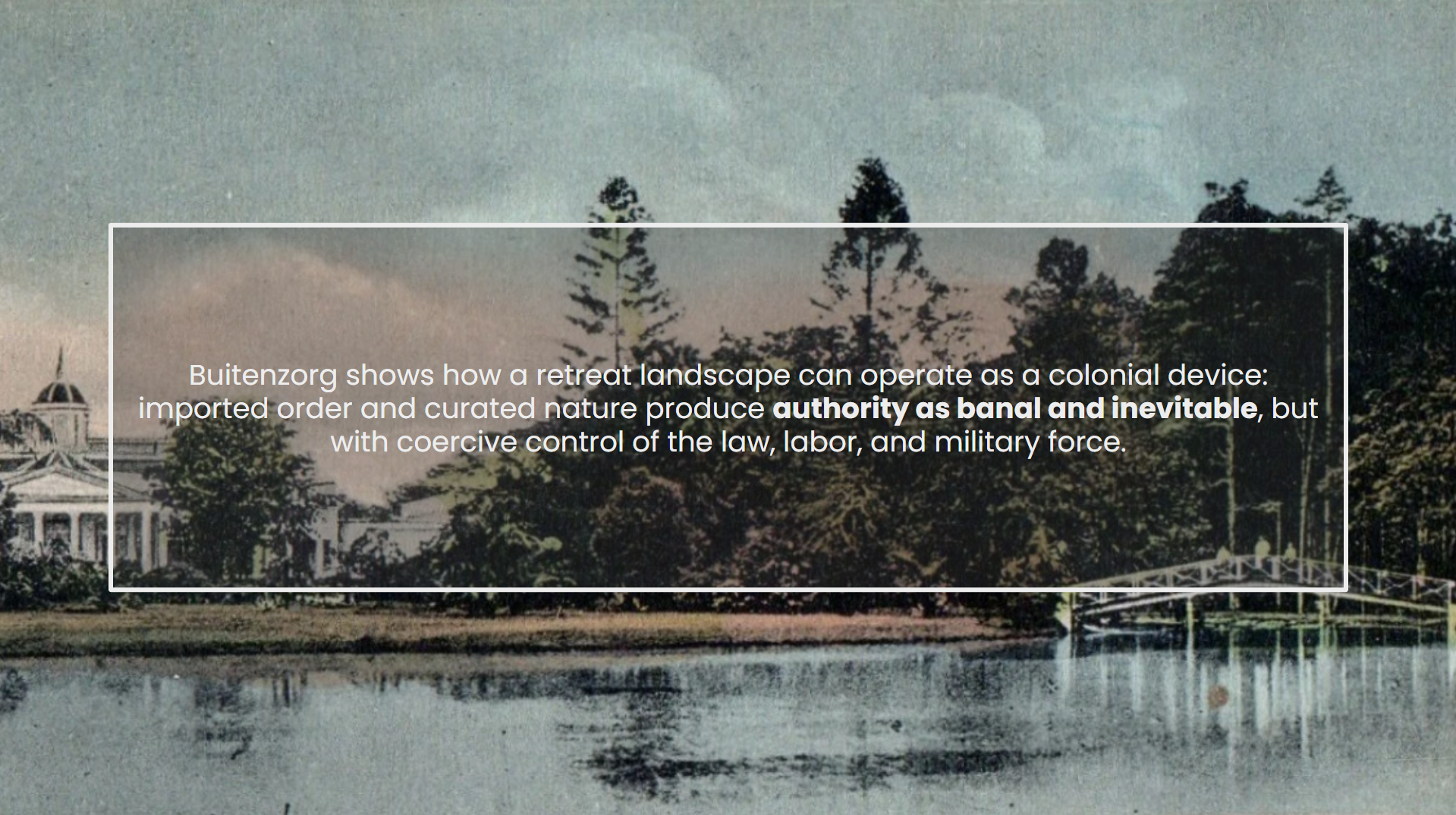
Buitenzorg’s significance, then, is not limited to its beauty or its comfort, even though both are real. Its significance lies in the way comfort is engineered into governance. Bogor’s relief makes the retreat plausible as a bodily experience, then the estate’s formal order, movement systems, and visual discipline translate bodily relief into political persuasion (Kementerian Sekretariat Negara Republik Indonesia, n.d.; Oldenburger-Ebbers, 1999; The Metropolitan Museum of Art, 2003). Military infrastructure and colonial hierarchy enforce the boundary conditions that allow persuasion to remain uninterrupted (Atlas of Mutual Heritage, n.d.; Verzetsmuseum Amsterdam, n.d.). Managed ecologies and imported plants convert tropical nature into a domain of control, competence, and inventory (Oldenburger-Ebbers, 1999; Encyclopaedia Britannica, 2026; UNESCO World Heritage Centre, n.d.; Wereldmuseum, n.d.). Buitenzorg shows how a regime can govern through atmosphere, how a garden can operate as a political instrument, and how imposed order can look serene while remaining backed by force. The retreat was never outside power. The retreat was one of power’s clearest expressions.
Works Cited
Atlas of Mutual Heritage. (n.d.). Philippina, fort (Buitenzorg). https://www.atlasofmutualheritage.nl/page/1456/philippina-fort-buitenzorg
Atlas of Mutual Heritage. (n.d.). View of Buitenzorg (known today as Istana Bogor). https://www.atlasofmutualheritage.nl/page/5175/view-of-buitenzorg
de Wit, A. (1896). Of Buitenzorg. In Facts and fancies about Java (DBNL). https://www.dbnl.org/tekst/wit_001fact01_01/wit_001fact01_01_0010.php
Encyclopaedia Britannica. (n.d.). Dutch East India Company. https://www.britannica.com/topic/Dutch-East-India-Company
Encyclopaedia Britannica. (2026, February 13). Culture System. https://www.britannica.com/event/Culture-System
Kehoe, M. L. (2015). Dutch Batavia: Exposing the hierarchy of the Dutch colonial city. Journal of Historians of Netherlandish Art, 7(1). https://doi.org/10.5092/jhna.2015.7.1.3
Kementerian Sekretariat Negara Republik Indonesia. (n.d.). Istana Bogor. https://www.setneg.go.id/baca/index/istana_bogor
Nationaal Archief. (n.d.). Plattegrond van “Buitenzorg, zooals het was op den 6 Augustus 1817” (Archief 4.VELH, inv. nr. 429). https://www.nationaalarchief.nl/onderzoeken/archief/4.VELH/invnr/429
Oldenburger-Ebbers, C. S. (1999). Buitenzorg en omliggende tuinen. Bulletin KNOB, 98(4), 165–170. https://doi.org/10.7480/knob.98.1999.4.352
The Metropolitan Museum of Art. (2003, October 1). Gardens of Western Europe, 1600–1800. https://www.metmuseum.org/essays/gardens-of-western-europe-1600-1800
UNESCO World Heritage Centre. (n.d.). Kebun Raya Bogor. https://whc.unesco.org/en/tentativelists/6353/
Verzetsmuseum Amsterdam. (n.d.). The pre-war Dutch East Indies. https://www.verzetsmuseum.org/en/kennisbank/the-pre-war-dutch-east-indies
Verzetsmuseum Amsterdam. (n.d.). The pre-war Dutch East Indies. https://www.verzetsmuseum.org/en/kennisbank/the-pre-war-dutch-east-indies
Image Addendum
Bik, A. J. (1842). Vue du palais de Buitenzorg, prise du parc [Lithograph]. Universitaire Bibliotheken Leiden (KITLV collection). https://www.universiteitleiden.nl/binaries/content/gallery/ul2/main-images/humanities/research-projects/rick-honings-voicing-the-colony.jpg
Eternal Loot. (n.d.). Bogor City Indonesia postcard: Palace of Governor General in Buitenzorg c1910 [Postcard]. eBay. Retrieved February 24, 2026, from https://www.ebay.com/itm/277514129951
Fleischer, M. (c. 1900). Olieverfschilderij voorstellende de Plantentuin te Buitenzorg [Oil painting]. Wikimedia Commons (Collectie Wereldmuseum, National Museum of World Cultures). https://commons.wikimedia.org/wiki/File:COLLECTIE_TROPENMUSEUM_Olieverfschilderij_voorstellende_de_Plantentuin_te_Buitenzorg_TMnr_15-983.jpg
Natradisun. (2017). Buitenzorg, Nederlands-Indië extension plan by H.Th. Karsten (1917) (Bogor, Indonesia) [Map image]. Reddit, r/papertowns. Retrieved February 24, 2026, from https://www.reddit.com/r/papertowns/comments/6t27v4/buitenzorg_nederlandsindi%C3%AB_extension_plan_by_hth/
Rach, J. (1772). View of Buitenzorg [Drawing]. Atlas of Mutual Heritage (Owner: National Library of Indonesia). https://www.atlasofmutualheritage.nl/page/5176/view-of-buitenzorg
Rach, J. (1772–1775). View of the estate and fountain at Buitenzorg, seen from the palace [Drawing]. Atlas of Mutual Heritage (Owner: National Library of Indonesia). https://www.atlasofmutualheritage.nl/page/5172/view-of-the-estate-and-fountain-at-buitenzorg
Rappard, J. C. (1882–1889). Een vijver met fontein in de plantentuin van Buitenzorg [Lithograph after an original watercolor]. Wikimedia Commons (Collectie Wereldmuseum, National Museum of World Cultures). https://commons.wikimedia.org/wiki/File:COLLECTIE_TROPENMUSEUM_Een_vijver_met_fontein_in_de_plantentuin_van_Buitenzorg_TMnr_3728-809.jpg
Troost, W. (II). (1834–1836). The back of the palace at Buitenzorg before the earthquake of October 10, 1834 [Oil painting]. Oceansbridge (after Rijksmuseum work). https://www.oceansbridge.com/shop/museums/rijksmuseum/the-back-of-the-palace-at-buitenzorg-before-the-earthquake-of-october-10-1834-1834-1836/